




















Build faster and smarter without breaking flow

Engineering teams don’t need more AI code generators. They need one workspace where technical context, decisions, documentation, and delivery stay connected.

WorkLLM is that workspace.

Trusted by enterprises

Image 1
Image 2
Image 3
Image 4
Image 5

The Challenge Modern Engineering Team Face Today

Decisions Lose Their Rationale

Design choices live in reviews, tickets, and Slack. Weeks later, the code remains — but the reasoning is gone. Engineers inherit outcomes, not intent.

Alignment Happens Too Late

Engineers re-explain systems every time they use AI — for code, docs, or explanations. Outputs compile, but miss how things actually work. Feedback comes late, rework grows, and velocity drops.

Onboarding Slows The Entire Team

Critical knowledge lives in senior engineers’ heads. New hires ramp through meetings and tribal knowledge, pulling seniors away from real work and slowing delivery.

Incident learnings don’t compound

Postmortems are written, then forgotten. When similar issues resurface, teams repeat the same analysis instead of building on what they already learned.
Why teams are slow

The cost of working this way:

Code is written by AI without architectural context
Engineers relearn past decisions instead of building on them
Documentation drifts from reality
AI accelerates typing, not system understanding
Review cycles grow longer and more defensive
Senior engineers become bottlenecks
AI helps write code. But without shared technical context, it doesn’t build better systems.

You're not lacking AI. You're lacking a workspace.

How WorkLLM Solves This?

WorkLLM gives your entire engineering team a shared AI workspace — where technical context is preserved, decisions stay traceable, and every contribution builds on what already exists.

Architecture Stays Connected With Implementation

Upload architecture docs, ADRs, and system notes once. When engineers use AI, it already understands the system, constraints, and trade-offs — no re-explaining for every change.

Decision stays visible and defensible

Trade-offs and rationale stay attached to the work, not buried in notes. As systems evolve, engineers understand why choices were made — not just what shipped.

Collaboration happens before code is finalized

Design intent is shared early. Engineers and reviewers align before implementation, reducing late-stage rework and review churn.

Learning Compounds Instead of Resetting

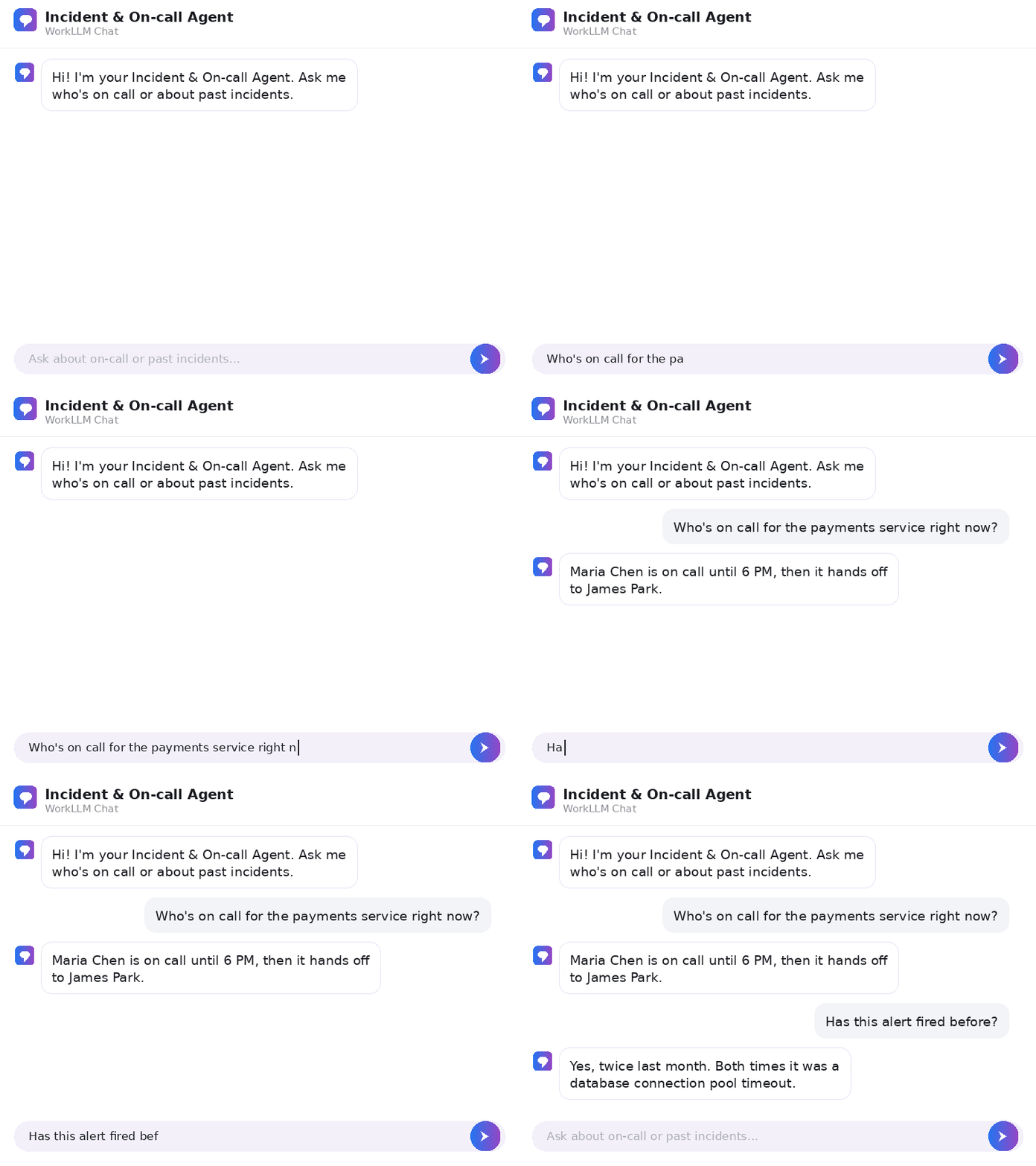
Past incidents, refactors, and design lessons remain accessible. When engineers revisit a system months later, it still explains itself.

One workspace. Multiple AIs. Shared technical context. Better code. Healthier systems.

Core Use cases for Engineering Teams

Understand Systems Faster. Even months later

New and existing engineers can quickly grasp how a system works, why decisions were made, and where constraints exist.

  • Ask questions across architecture and design docs
  • Retrieve decision rationale instantly
  • Reduce onboarding and reorientation time

Write Better Technical Documents With Less Efforts

Documentation stays accurate because it’s generated from real system context.

  • Generate design docs and explanations
  • Keep docs aligned with code and decisions
  • Reduce stale or misleading documentation

Improve Code Reviews & Design Discussions

Reviews focus on correctness and impact not missing context.

  • Surface architectural intent during review
  • Reduce back-and-forth explanations
  • Catch misalignment earlier

Reduce rework caused by late feedback

Design intent is visible before implementation begins.

  • Share technical direction early
  • Align across engineers and leads
  • Avoid costly rework

Preserve institutional knowledge

System knowledge doesn’t walk out the door.

  • Capture lessons from incidents and refactors
  • Make past decisions searchable
  • Reduce dependency on specific individuals

Reduce Engineering Overhead

AI Agents handle recurring engineering coordination so teams stay focused.

  • Summarize Jira activity
  • Track risks and dependencies
  • Generate regular updates

Why not just use ChatGPT?

ChatGPT helps generate code. Engineering teams need system understanding and continuity.

  • ChatGPT doesn’t understand constant updates to your architecture and code.
  • It can’t preserve design rationale
  • It doesn’t accumulate engineering knowledge
  • It can’t keep systems aligned over time

WorkLLM is built for engineering teams & not for isolated prompts.

Happy Customers

Customer satisfaction is our major goal. See what our customers are saying about us.

Design for change, not just delivery

Create systems where evolution is expected — and supported — not patched over.