
AI agents are rapidly becoming a core component of modern AI systems. Instead of simply generating responses, agents can perform structured tasks such as retrieving data, analyzing documents, triggering workflows, and interacting with external systems.
Traditionally, building AI agents required engineering resources and custom development. That is changing quickly with the rise of no-code AI agent platforms.
These platforms allow teams to design, deploy, and manage AI agents without writing code. Marketing teams, operations teams, analysts, and product managers can build agents that automate workflows and support decision-making.
Below are seven no-code AI agent platforms organizations are evaluating today.
1. WorkLLM
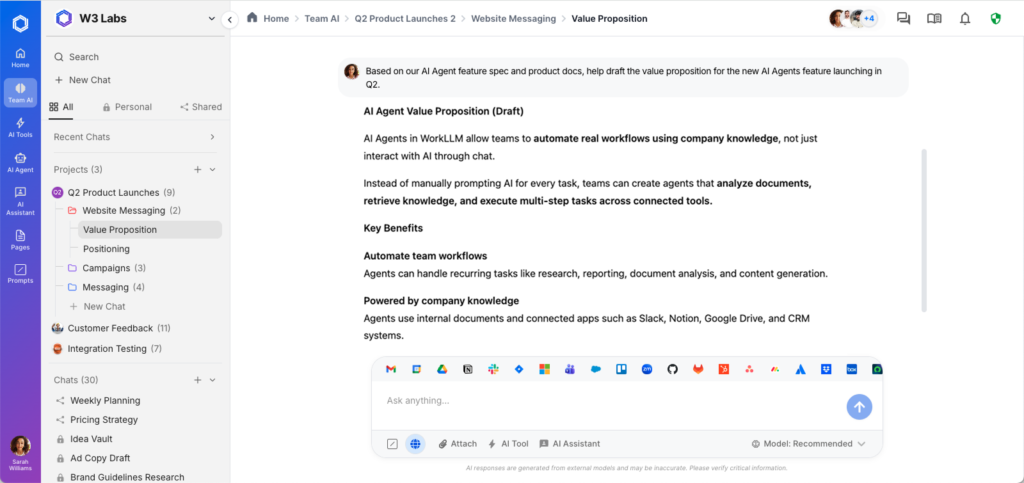
WorkLLM provides a structured AI workspace where teams can build AI Assistants and AI Agents that operate inside shared project environments.
Instead of focusing only on agent creation, WorkLLM connects agents with layered memory, multi-model access, and collaborative workflows. This allows agents to operate with persistent context across projects and departments.
Strengths
- No-code AI agent creation inside shared workspaces
- Multi-LLM access in one environment
- Layered project memory for contextual agents
- Integration with AI Tools and workflow automation
- Cross-functional collaboration across teams
Best for
Organizations that want AI agents embedded directly into team workflows rather than isolated automation tools.
2. Langdock
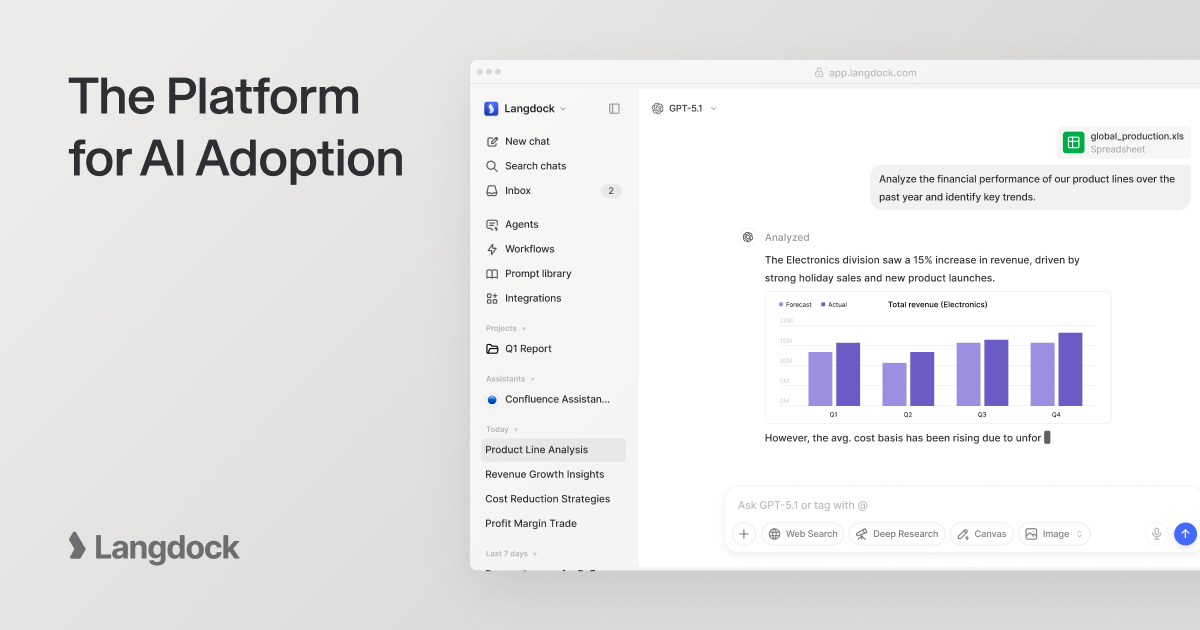
Langdock positions itself as an enterprise AI platform designed for secure AI adoption across organizations. It provides a centralized environment where teams can deploy assistants and agents while maintaining governance and compliance.
Strengths
- Secure enterprise AI deployment
- Centralized governance and access controls
- No-code assistant and workflow capabilities
Best for
Organizations prioritizing secure, controlled rollout of AI across departments.
3. Abacus.AI
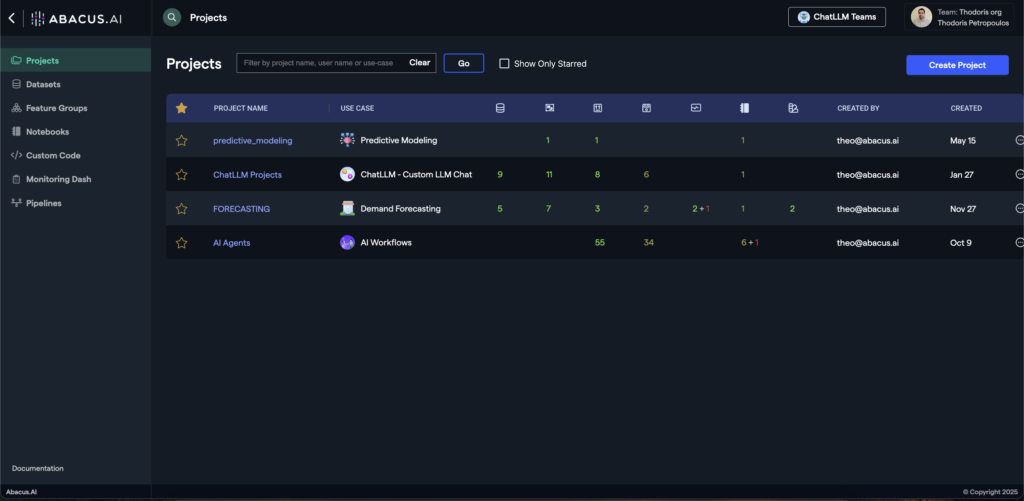
Abacus.AI provides a generative AI platform that supports agent-driven workflows and automation. Its system enables organizations to build AI-powered processes that combine data analysis, model interaction, and task execution.
Strengths
- AI workflow automation capabilities
- Agent-based task execution
- Applied AI systems and enterprise automation
Best for
Organizations building AI-driven operational workflows.
4. Flowise
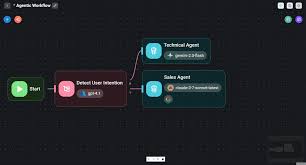
Flowise is a visual platform for building LLM applications and agents using a node-based interface. It allows users to connect models, tools, and memory components using drag-and-drop logic.
Strengths
- Visual node-based agent builder
- Flexible integrations with LLM frameworks
- Customizable workflows and pipelines
Best for
Technical teams that want visual control over AI workflows without full custom coding.
5. Zapier AI Agents
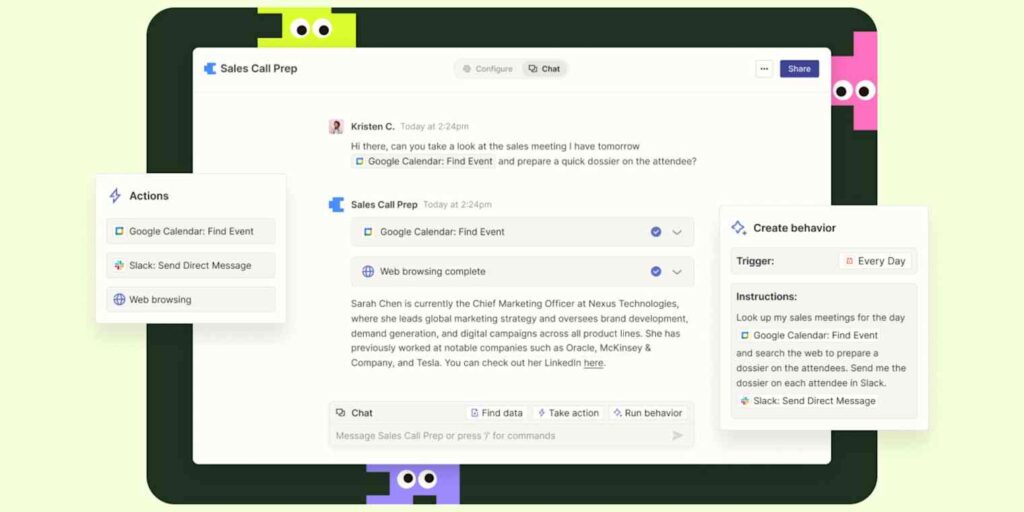
Zapier has expanded its automation platform to include AI agents capable of making decisions and triggering actions across thousands of integrated applications.
Strengths
- Extensive integrations with SaaS tools
- Strong automation workflows
- Easy no-code deployment
Best for
Teams automating repetitive operational processes across multiple tools.
6. Lyzr
Lyzr focuses on enterprise AI agent frameworks designed for building secure and production-ready agents. It emphasizes governance, modular agent architectures, and deployment across enterprise environments.
Strengths
- Modular AI agent architecture
- Enterprise security focus
- Agent orchestration capabilities
Best for
Organizations building structured AI agent systems for enterprise use cases.
7. Dust
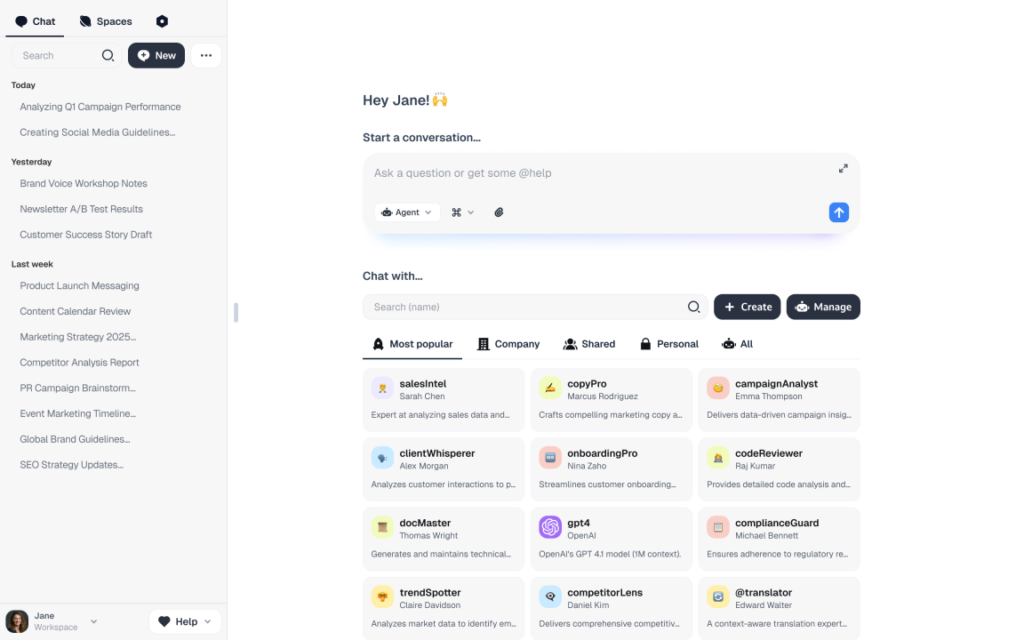
Dust is an AI platform designed to help teams create assistants and agents that interact with internal company knowledge and tools. It emphasizes contextual intelligence by connecting agents to company data sources.
Strengths
- Strong internal knowledge integration
- Collaborative AI assistants and agents
- Tool integrations across company systems
Best for
Teams building agents that operate on internal company knowledge and documentation.
Summary Comparison
| Platform | Core Focus | No-Code Agents | Workflow Automation | Multi-Model Access | Team Collaboration |
|---|---|---|---|---|---|
| WorkLLM | AI workspace & orchestration | Yes | Advanced | Yes | High |
| Langdock | Enterprise AI adoption | Yes | Moderate | Yes | Moderate |
| Abacus.AI | Applied AI workflows | Yes | Strong | Yes | Moderate |
| Flowise | Visual LLM builder | Yes | Custom | Yes | Low |
| Zapier AI Agents | Automation agents | Yes | Strong | Limited | Moderate |
| Lyzr | Enterprise AI agent framework | Yes | Strong | Yes | Moderate |
| Dust | Knowledge-connected agents | Yes | Moderate | Limited | Moderate |
What to Look for in a No-Code AI Agent Platform
Organizations evaluating these platforms should consider several factors.
Workflow Integration
Agents should be able to interact with internal systems and trigger actions across tools.
Shared Context and Memory
Agents become more valuable when they operate with persistent context rather than isolated prompts.
Governance and Visibility
Enterprise environments require permission structures, audit controls, and usage visibility.
Model Flexibility
Multi-model access allows teams to choose the best model for different tasks.
Team Collaboration
Agents should operate inside team environments rather than individual user accounts.
The Shift from Agents to Orchestrated AI Systems
No-code agent builders make it easier to automate tasks and deploy AI-driven workflows quickly. However, as organizations scale agent usage, coordination becomes the next challenge.
Agents require shared memory, governance controls, workflow visibility, and integration with broader team environments.
This is where orchestration platforms such as WorkLLM become important. Instead of deploying isolated agents across different tools, WorkLLM allows organizations to coordinate assistants, agents, models, and workflows within one structured AI workspace.
In this architecture, agents are not standalone automations. They become components of a coordinated enterprise AI system.