ChatGPT Enterprise has become one of the most widely adopted enterprise AI platforms. It offers secure deployment of OpenAI models with enterprise admin controls, SSO, usage insights, and privacy commitments around business data.
However, many organizations evaluate alternatives based on ecosystem alignment, multi-model flexibility, workflow orchestration, infrastructure control, or deeper team collaboration requirements.
Here are seven strong ChatGPT Enterprise alternatives for enterprise organizations.
1. WorkLLM
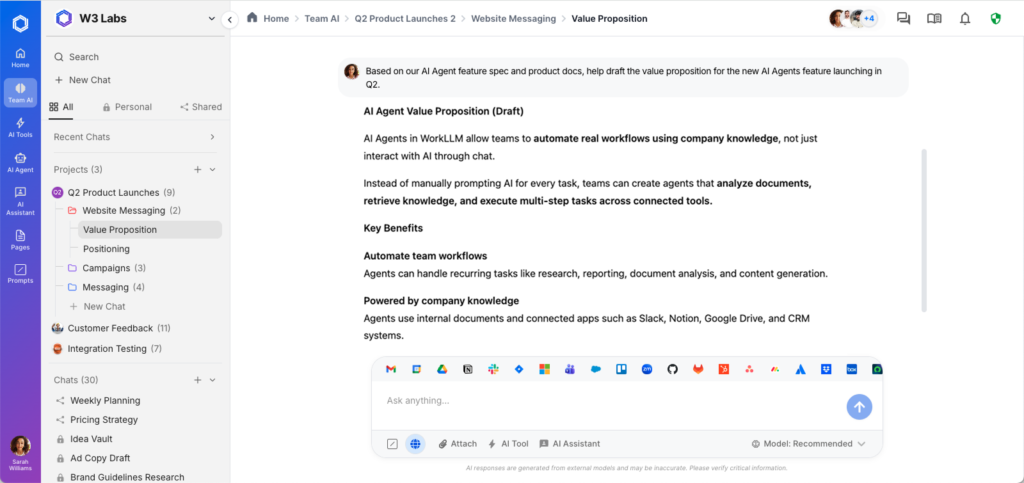
WorkLLM is positioned as an AI workspace and orchestration layer for enterprise teams. While ChatGPT Enterprise focuses primarily on secure model deployment and conversational AI, WorkLLM integrates multi-model access, structured memory, AI Tools, AI Assistants, and AI Agents into a shared team environment.
It emphasizes coordination, workflow execution, and cross-functional collaboration rather than isolated chat usage.
Strengths
- Multi-LLM access in one workspace
- Layered team memory across projects and organization
- AI Tools for repeatable workflows
- AI Assistants and AI Agents for execution
Best for
Enterprises that want coordinated AI workflows across teams instead of individual chat accounts.
2. Claude Enterprise
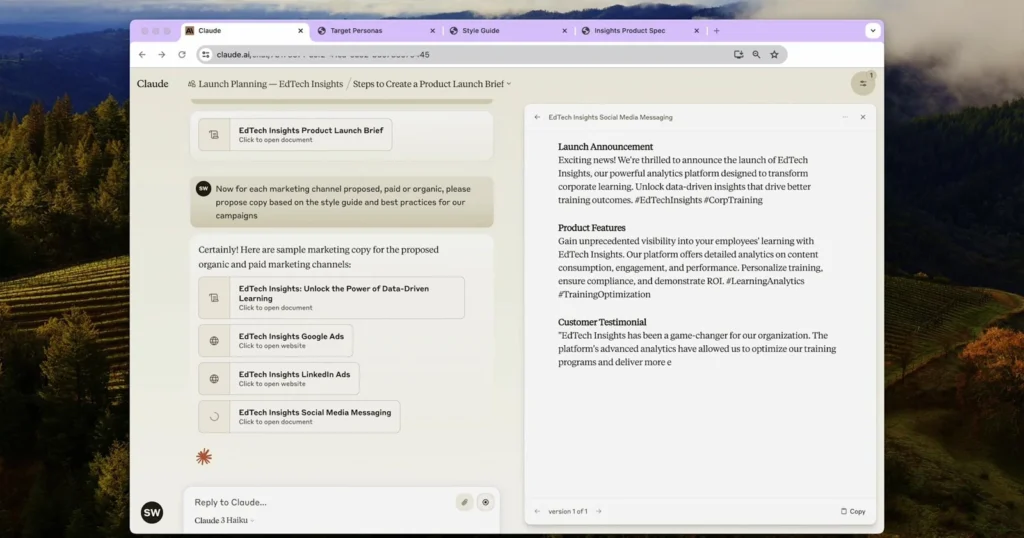
Claude Enterprise is Anthropic’s enterprise deployment of Claude. It is frequently evaluated alongside ChatGPT Enterprise for reasoning quality, long-context document analysis, and configurable enterprise controls.
Claude Enterprise includes administrative management features and enterprise data retention configurations suitable for compliance-heavy environments.
Strengths
- Long-context reasoning capabilities
- Enterprise admin and data retention controls
- Strong document analysis positioning
Best for
Enterprises requiring deep analytical reasoning and document-heavy workflows.
3. Microsoft Copilot
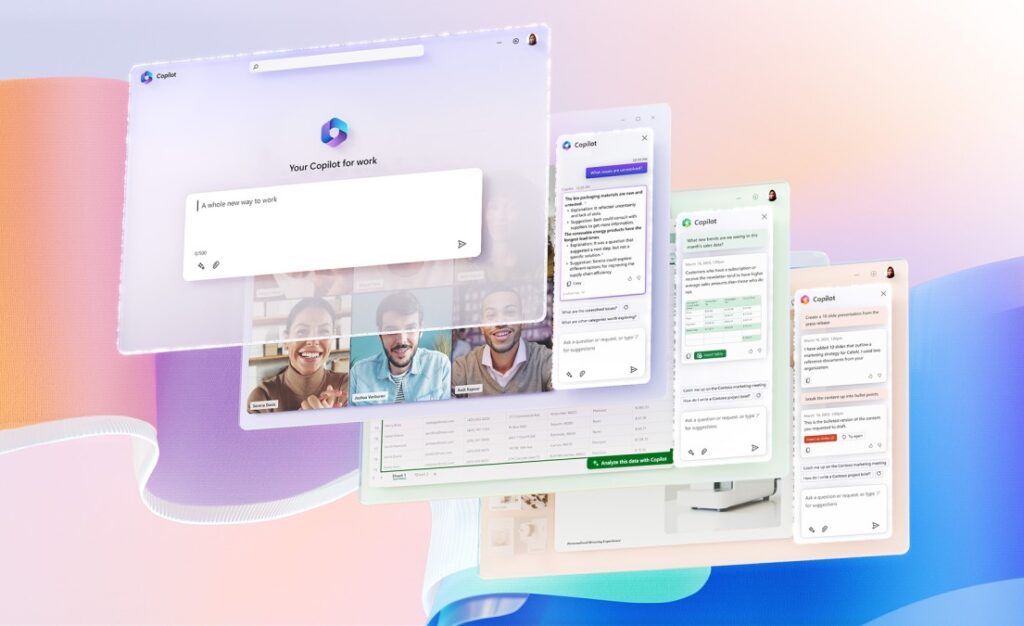
Microsoft Copilot embeds AI directly into Microsoft 365 applications such as Word, Excel, PowerPoint, Outlook, and Teams. It enhances productivity inside the Microsoft ecosystem and includes enterprise governance capabilities.
It is a natural alternative for organizations standardized on Microsoft infrastructure.
Strengths
- Deep integration with Microsoft 365
- Enterprise identity and compliance controls
- AI embedded within core productivity workflows
Best for
Enterprises operating primarily within Microsoft 365.
4. Google Gemini Enterprise
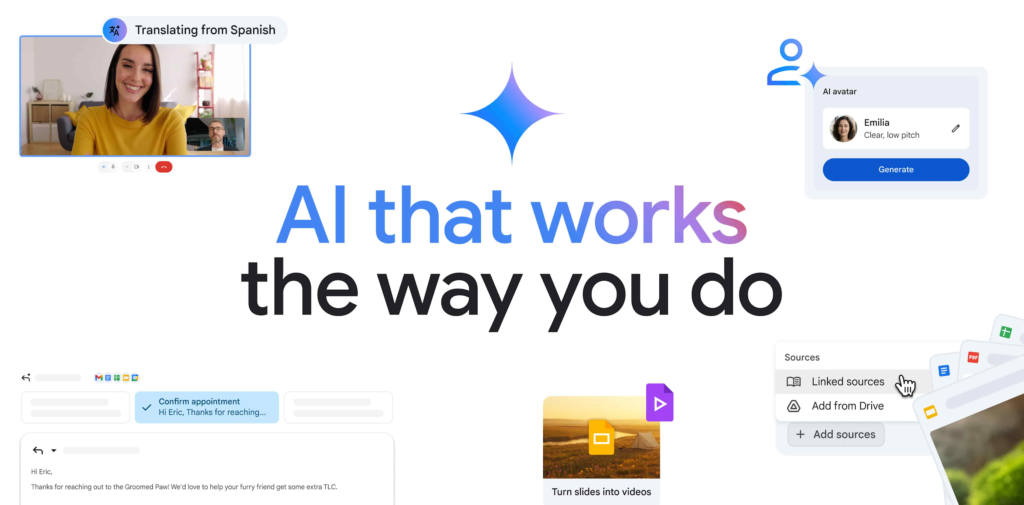
Gemini Enterprise integrates AI into Google Workspace and Google Cloud environments. It applies Workspace-level governance controls while enabling AI-powered drafting, summarization, and collaboration inside Docs, Sheets, Gmail, and Drive.
It is commonly evaluated by Google-native organizations comparing against ChatGPT Enterprise.
Strengths
- Native Google Workspace integration
- Workspace admin and identity controls
- AI embedded in collaborative documents
Best for
Enterprises standardized on Google Workspace.
5. Coworker.ai
Coworker AI positions itself as enterprise AI for complex work across tools. Rather than focusing solely on conversational AI, it emphasizes cross-tool automation, task coordination, and execution across connected systems.
It becomes relevant when organizations want AI that moves beyond answering questions to completing tasks.
Strengths
- Cross-tool integrations
- Workflow automation across business systems
- AI-driven coordination for complex work
Best for
Enterprises seeking AI execution across multiple workplace tools.
6. Langdock
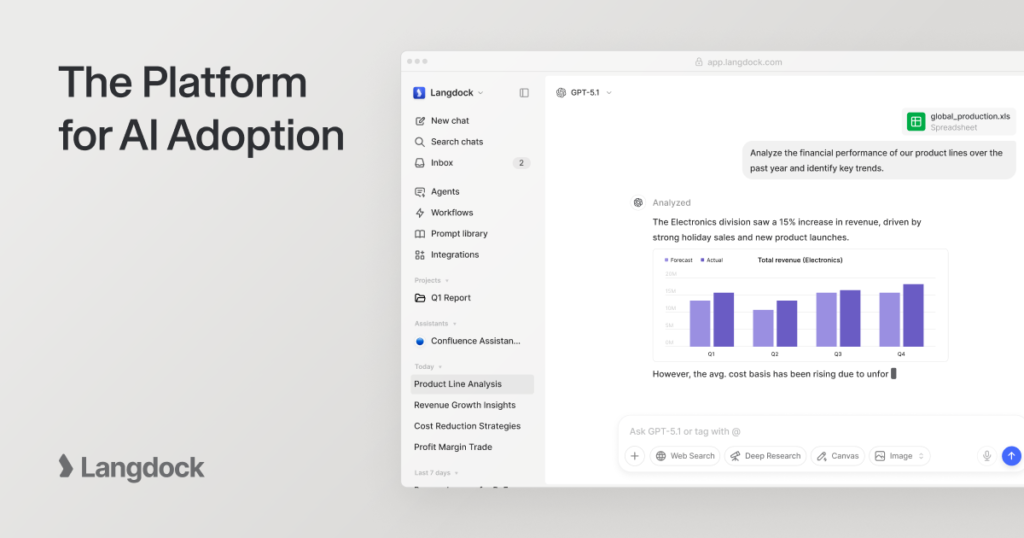
Langdock positions itself as a platform for enterprise AI adoption, providing centralized access to multiple models within a governed environment. It focuses on secure rollout and structured deployment of AI across organizations.
Strengths
- Centralized AI governance layer
- Secure enterprise rollout
- Organization-wide AI deployment framework
Best for
Enterprises prioritizing secure and controlled AI adoption.
7. Abacus.AI
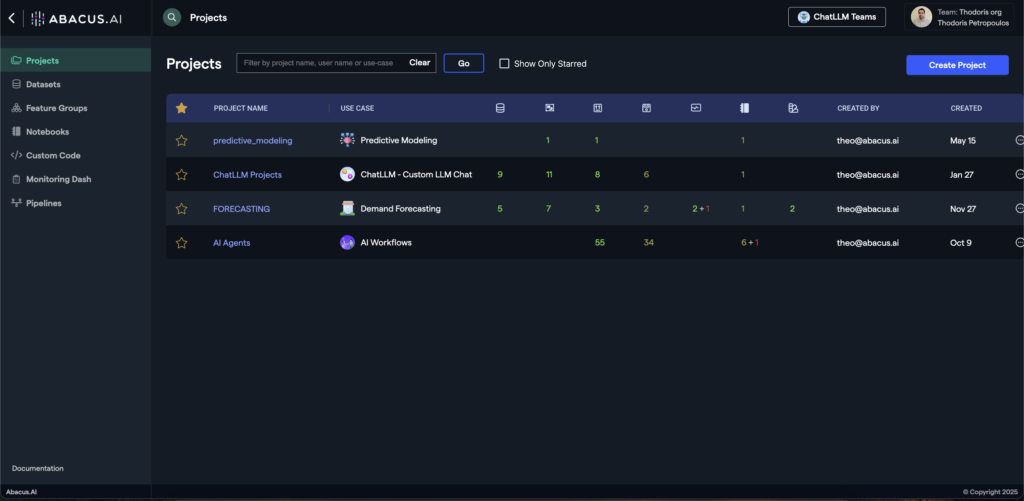
Abacus.AI provides an enterprise AI platform supporting generative workflows, AI assistants, and applied AI systems. It focuses on enabling businesses to build AI-driven workflows and automation systems rather than solely providing conversational AI.
Strengths
- Enterprise GenAI workflows
- AI assistant deployment
- Applied AI system building
Best for
Enterprises building custom AI-powered workflows and business systems.
Summary Comparison Table
| Platform | Core Positioning | Enterprise Governance | Multi-Model Access | Team Collaboration | AI Execution Layer |
|---|---|---|---|---|---|
| WorkLLM | AI workspace & orchestration | Yes | Yes | High | Full (Tools, Assistants, Agents) |
| Claude Enterprise | Deep reasoning enterprise AI | Yes | Limited | Moderate | Assistants |
| Microsoft Copilot | Microsoft 365 embedded AI | Yes | Limited | High (within M365) | Assistants + ecosystem agents |
| Google Gemini Enterprise | Workspace embedded AI | Yes | Limited | High (within Workspace) | Workspace assistants |
| Coworker.ai | Cross-tool AI coordination | Yes (positioned) | Platform-dependent | Moderate | Assistants + workflow automation |
| Langdock | Secure AI adoption platform | Yes | Yes | Moderate | Governance-focused |
| Abacus.AI | Enterprise applied AI platform | Yes (positioned) | Yes | Low to Moderate | Workflows + assistants |
Choosing the Right ChatGPT Enterprise Alternative
If your primary concern is reasoning depth and document analysis, Claude Enterprise is often evaluated alongside ChatGPT Enterprise.
If your organization is tightly integrated into Microsoft or Google ecosystems, Copilot or Gemini may provide embedded productivity advantages.
However, many enterprises evaluating alternatives are not simply replacing one chat interface with another. They are rethinking how AI operates across teams.
ChatGPT Enterprise primarily enables secure conversational AI for individuals and departments.
WorkLLM is designed for coordinated team execution.
It combines multi-model flexibility, structured team memory, AI Tools for repeatable workflows, AI Assistants for role-based tasks, and AI Agents for execution across projects.
For organizations moving beyond chat into structured AI-powered collaboration and operational workflows, WorkLLM represents a broader architectural shift rather than a model swap.
The right alternative depends on whether you are optimizing for a model-level replacement or a team-level AI operating system.