

Sales teams are rapidly adopting AI to improve productivity, streamline workflows, and close deals faster. From prospect research and email drafting to pipeline analysis and CRM automation, AI now supports many stages of the modern sales process.
However, as adoption grows, sales leaders are moving beyond standalone AI writing tools. They are evaluating platforms that support collaboration, workflow automation, CRM integration, and cross-team visibility.
Below are seven AI platforms commonly used by modern sales teams.
1. WorkLLM
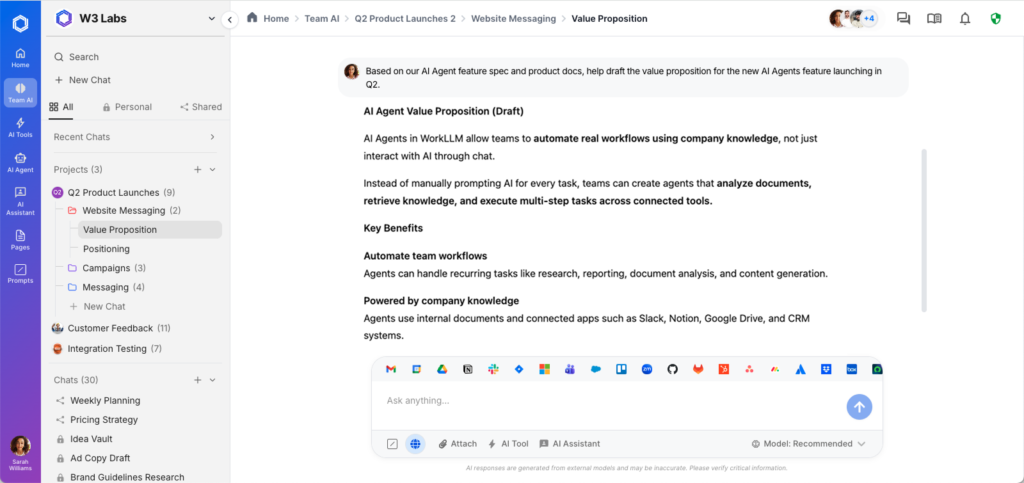
WorkLLM is designed as a shared AI workspace for teams rather than an individual AI assistant. Sales teams use it to coordinate research, messaging frameworks, competitive analysis, deal preparation, and internal collaboration.
Because WorkLLM includes layered project memory, context can persist across accounts, deals, and customer conversations. Sales, marketing, and product teams can collaborate inside the same AI environment.
Strengths
- Multi-LLM access in one workspace
- Shared project memory across accounts and deals
- Collaboration across sales, marketing, and product teams
- AI Assistants and AI Agents for workflow execution
- Integration with internal knowledge and workflows
Best for
Sales organizations that need shared context across deals and cross-functional collaboration.
2. Gong
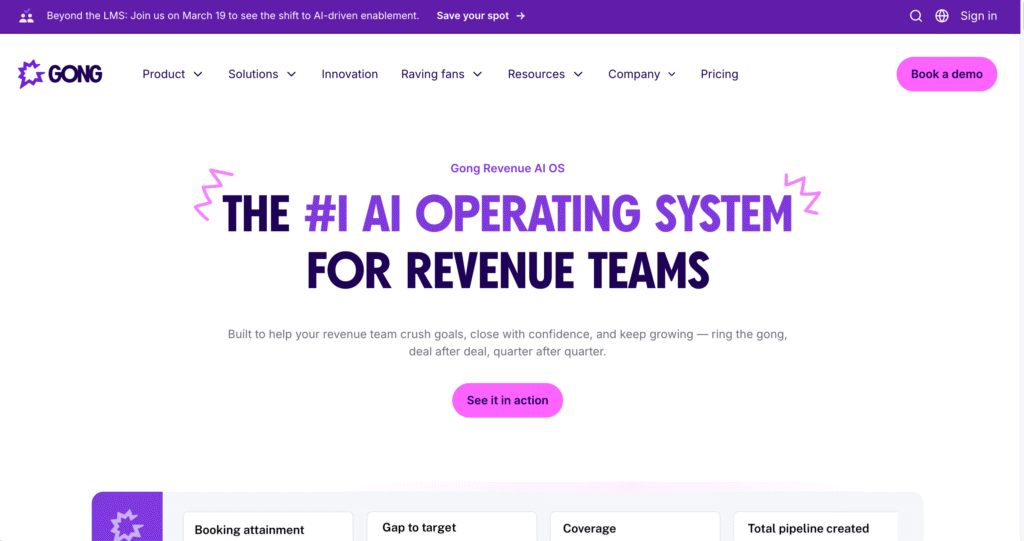
Gong is one of the most established revenue intelligence platforms. It analyzes sales conversations across calls, emails, and meetings to provide insights into deal health and sales performance.
Sales leaders use Gong to understand customer signals, coaching opportunities, and pipeline risks.
Strengths
- Conversation intelligence and deal analysis
- Pipeline visibility and forecasting insights
- Sales coaching and performance analytics
Best for
Sales teams focused on conversation intelligence and deal analytics.
3. Clari
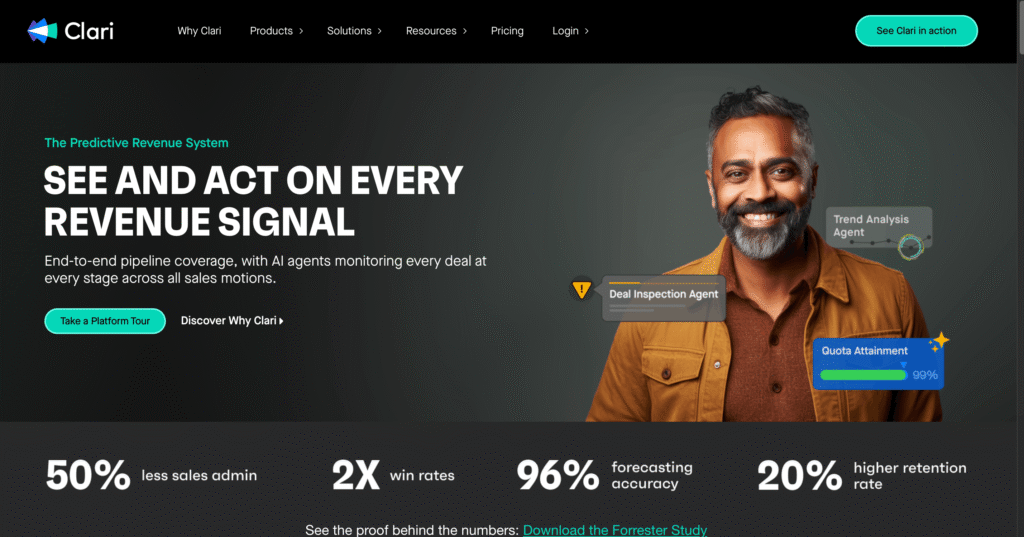
Clari focuses on revenue operations and pipeline forecasting. It uses AI to analyze CRM data, pipeline movement, and deal progression to provide sales leaders with forecasting visibility.
Strengths
- Pipeline forecasting and revenue analytics
- Deal tracking and risk identification
- Sales performance insights
Best for
Revenue operations teams focused on forecasting and pipeline management.
4. Copy.ai
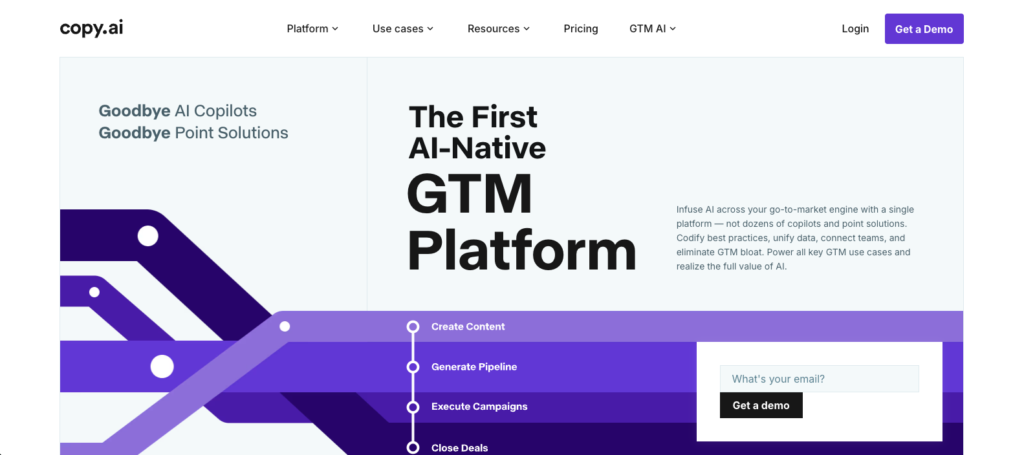
Copy.ai has expanded beyond copywriting into go-to-market workflows that support sales and marketing teams. Sales teams often use it for outbound messaging, email sequences, and sales enablement content.
Strengths
- Sales email and outreach generation
- GTM messaging workflows
- Fast content iteration for campaigns
Best for
Sales teams running outbound campaigns and demand generation initiatives.
5. Lavender
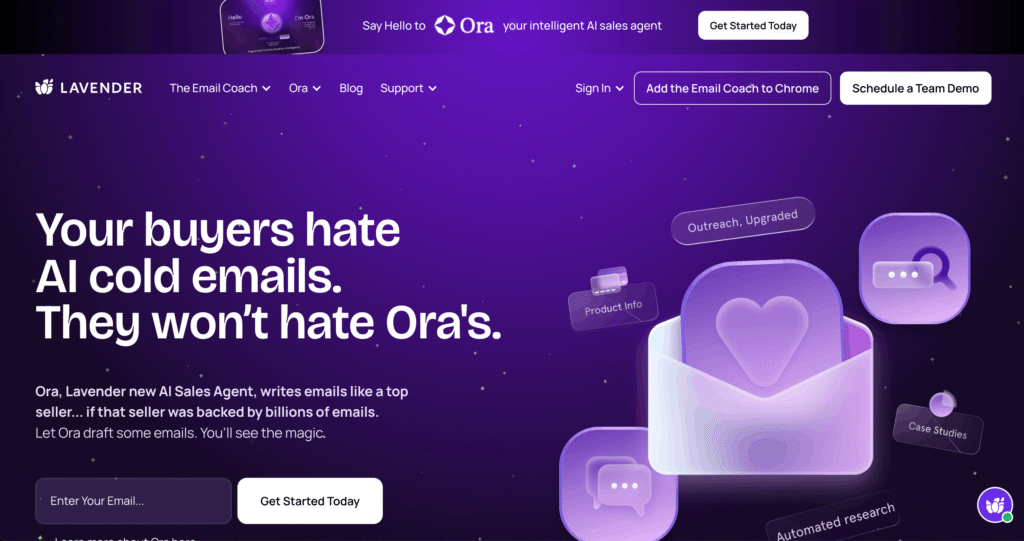
Lavender focuses specifically on improving sales email performance. It analyzes email content and provides real-time suggestions to increase reply rates and improve messaging clarity.
Strengths
- Email writing assistance for sales outreach
- Personalization recommendations
- Coaching insights for sales reps
Best for
Sales teams optimizing cold outreach and email performance.
6. Apollo
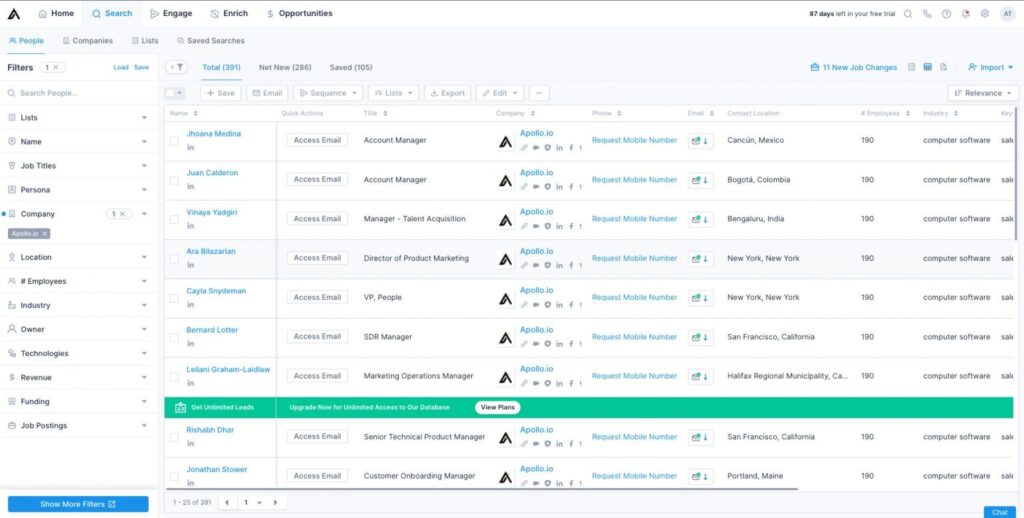
Apollo combines a large B2B data platform with sales engagement tools and AI-powered prospecting capabilities. It supports prospect discovery, outreach automation, and lead management.
Strengths
- Prospect database and enrichment
- Outreach automation and sequencing
- Lead generation and contact discovery
Best for
Sales teams focused on prospecting and pipeline generation.
7. HubSpot AI
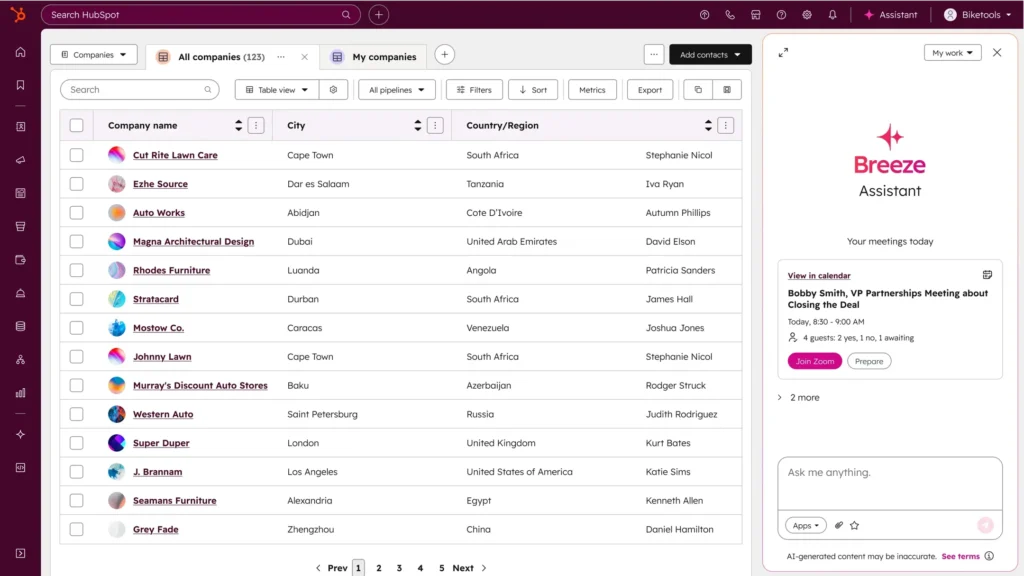
HubSpot has integrated AI capabilities into its CRM platform to support sales, marketing, and customer service teams. Its AI features help with email drafting, deal insights, and CRM automation.
Strengths
- AI integrated within CRM workflows
- Sales automation and insights
- Pipeline management and reporting
Best for
Teams already operating within the HubSpot ecosystem.
Summary Comparison Table
| Platform | Core Focus | Sales Capability | Team Collaboration | Multi-Model Access | AI Execution Layer |
|---|---|---|---|---|---|
| WorkLLM | AI workspace & orchestration | Advanced (research, messaging, collaboration) | High | Yes | Full (Tools, Assistants, Agents) |
| Gong | Conversation intelligence | Strong (call and meeting analysis) | Moderate | No | Analytics-focused |
| Clari | Revenue operations platform | Strong (forecasting and pipeline analysis) | Moderate | No | Analytics-focused |
| Copy.ai | GTM messaging platform | Moderate (outreach content) | Moderate | Varies | Limited |
| Lavender | Sales email assistant | Moderate (email optimization) | Low | No | Limited |
| Apollo | Prospecting and engagement platform | Strong (lead generation and outreach) | Moderate | No | Limited |
| HubSpot AI | CRM-integrated AI | Strong (CRM insights and automation) | High | No | CRM workflows |
What Sales Leaders Should Evaluate
When selecting an AI platform, sales leaders should consider several factors.
Deal Context and Memory
Can the platform retain knowledge across accounts and customer interactions?
Workflow Integration
Does AI connect directly to CRM systems and sales processes?
Cross-Team Collaboration
Can sales, marketing, and product teams collaborate within the same AI environment?
Automation Capability
Does the platform support agents or workflows that reduce repetitive work?
Governance and Visibility
Can leadership monitor usage, outputs, and operational impact?
The Shift from Sales Tools to Sales Intelligence Systems
The first generation of AI tools helped sales teams write emails faster or analyze calls more efficiently.
The next generation focuses on coordination.
Instead of isolated tools for prospecting, messaging, and analytics, organizations are building systems where AI supports the entire sales workflow.
Platforms such as WorkLLM enable this shift by combining shared memory, multi-model access, assistants, agents, and workflow coordination inside one environment. Sales teams can prepare deals, analyze accounts, coordinate with marketing, and automate tasks within the same structured workspace.
As AI adoption matures, the advantage will not come from generating more outreach messages. It will come from how effectively sales teams coordinate intelligence across deals, customers, and internal teams.
Author Details

Manoj is a Project Development Manager known for his innovative problem-solving skills and passion for technology. Versed in multiple programming languages, he has worked on a wide range of projects, from enterprise-level software to mobile apps. A strong advocate for teamwork, Manoj thrives in collaborative settings and is always keen to embrace new technologies.