
Healthcare enterprises are under pressure to improve outcomes, reduce clinician burnout, and run leaner operations. AI has become a critical lever—but the real advantage comes from choosing platforms that are enterprise‑grade, compliant, and workflow‑aware, not just “smart demos.”
Below are 9 of the best AI platforms for healthcare enterprises in 2026, spanning clinical workflows, imaging, data platforms, and patient engagement. The focus is on platforms that can scale across service lines, specialties, and sites of care.
1. WorkLLM
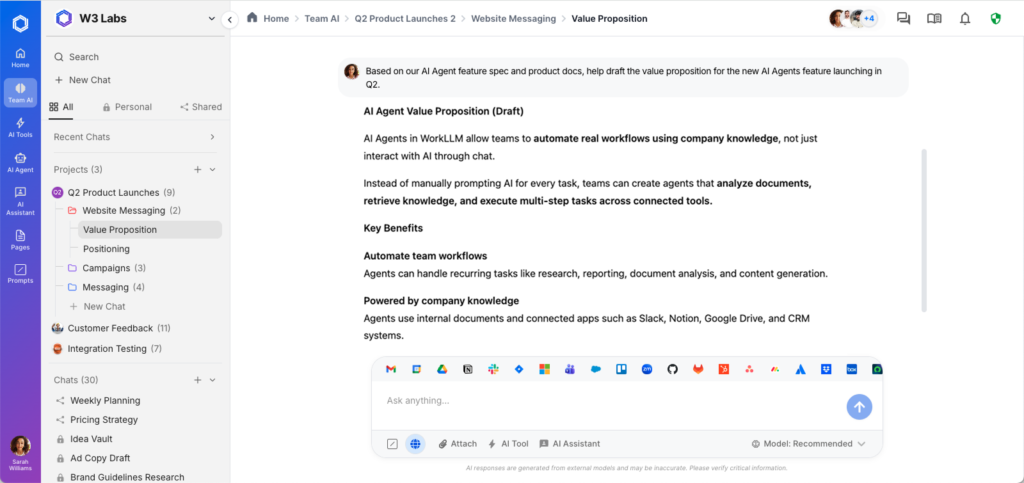
WorkLLM is a multi‑LLM AI workspace and orchestration layer designed for teams that need structured, repeatable workflows rather than ad‑hoc prompting. While it’s industry‑agnostic, its architecture maps well to healthcare enterprises that must coordinate AI across departments, roles, and use cases.
Key capabilities
- Multi‑LLM support to flexibly use different models for clinical, operational, and administrative workflows in one workspace
- AI Tools for one‑click, standardized workflows (e.g., clinical note drafting, discharge instructions, ops reports)
- AI Assistants tailored to roles such as clinician, care coordinator, revenue cycle analyst, or operations leader
- AI Agents to orchestrate multi‑step processes across systems (e.g., summarize charts → draft note → generate patient‑facing summary)
- Team‑first design with shared memory, permissions, and governance for cross‑functional healthcare teams
Best for:
Healthcare enterprises that want a central, multi‑model AI workspace to standardize tools, assistants, and workflows across clinical, operational, and administrative teams.
2. OpenAI for Healthcare
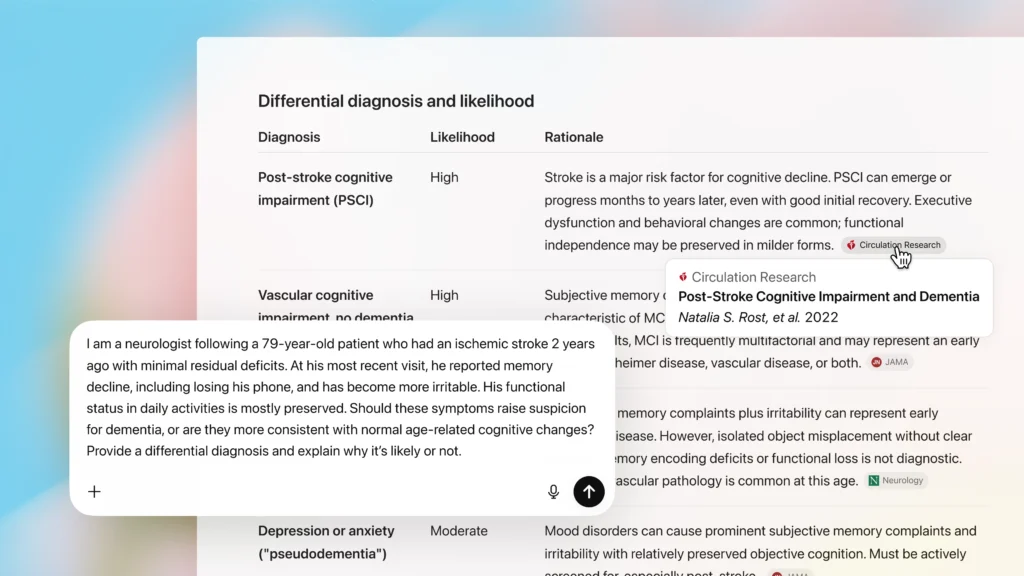
OpenAI for Healthcare provides secure, enterprise‑grade AI services tailored to health systems, payers, and life sciences organizations. It is designed to help teams scale high‑quality care, reduce administrative burden, and build custom clinical solutions while supporting HIPAA compliance.
Key capabilities
- GPT‑5.2–powered models tuned for healthcare, outperforming earlier OpenAI models in clinical contexts
- ChatGPT for Healthcare for clinicians, researchers, and administrators to streamline documentation, reasoning, and communication
- Enterprise‑grade controls and infrastructure to support HIPAA‑aligned deployments
- Support for custom solutions across care delivery, research, and life sciences workflows
- Partnerships with leading organizations such as Amgen, Moderna, and Thermo Fisher to advance AI in life sciences
Best for:
Health systems and life sciences organizations that need secure, model‑centric AI infrastructure to power clinical, research, and operational applications at scale.
3. Tempus
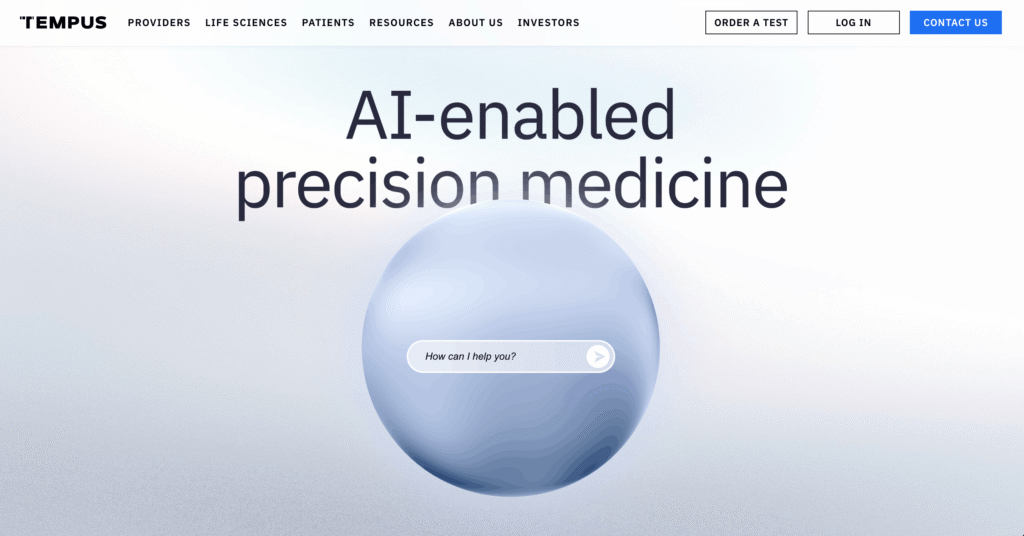
Tempus is a precision medicine platform that applies AI to clinical and molecular data, with a strong focus on oncology. It helps clinicians make more informed treatment decisions by connecting genomic insights with real‑world clinical data.
Key capabilities
- AI‑driven analysis of clinical and molecular data to support precision oncology.
- Tools for treatment selection, clinical trial matching, and risk stratification.
- Integration of genomic testing with real‑world evidence for more personalized care.
- Support for research and translational programs across cancer centers and systems
- Data infrastructure to turn large‑scale datasets into actionable clinical insights
Best for:
Enterprises with strong oncology programs seeking to embed precision medicine and AI‑driven decision support into routine cancer care.
4. Aidoc
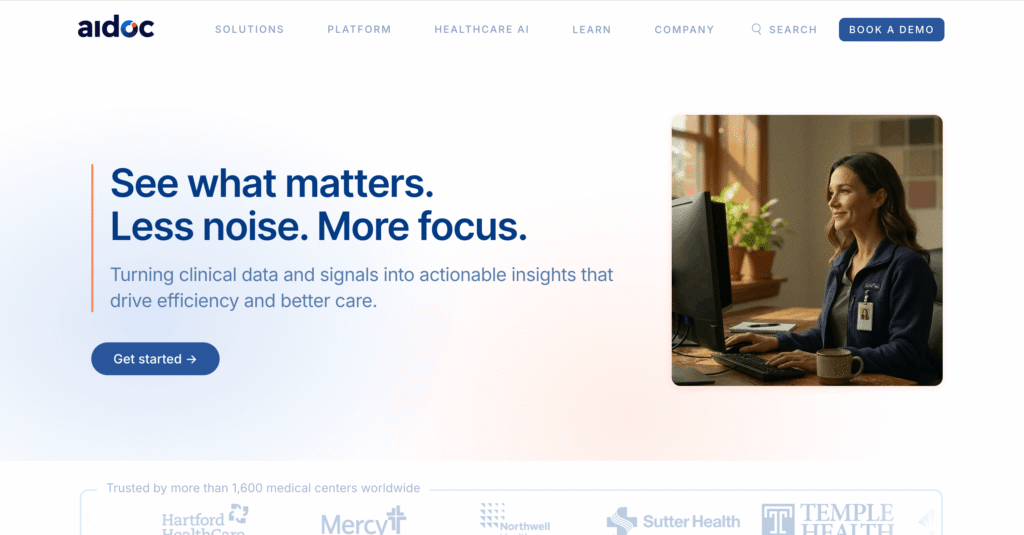
Aidoc delivers an enterprise AI platform for medical imaging, enabling health systems to deploy, manage, and scale multiple imaging AI algorithms across clinical workflows.
Key capabilities
- AI solutions for real‑time triage and detection of critical findings in radiology.
- Central platform to deploy, manage, and monitor multiple AI algorithms across modalities.
- Tight integration into radiology workflows and PACS/RIS systems
- Enterprise‑level management of performance, alerts, and quality metrics
- Designed to scale across multiple hospitals and imaging departments
Best for:
Health systems looking to industrialize imaging AI and unify multiple algorithms within a single enterprise radiology platform.
5. Google Cloud Healthcare (Healthcare Data Engine / Healthcare API)
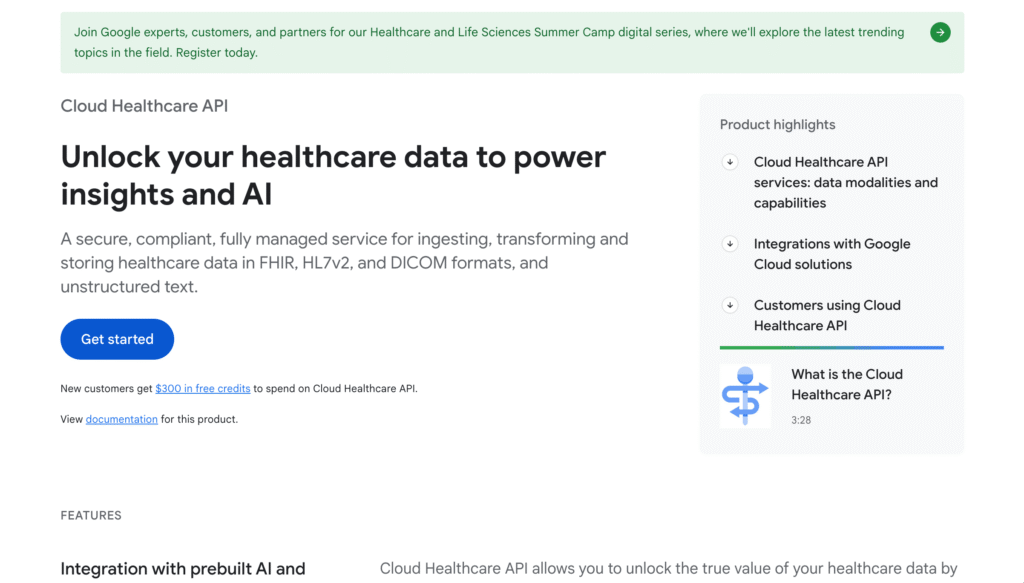
Google Cloud Healthcare offers an AI‑native data platform built around its Healthcare API and Healthcare Data Engine. It is aimed at organizations that want to aggregate heterogeneous clinical data and apply advanced analytics and AI at scale.
Key capabilities
- Healthcare API to ingest and normalize data from EHRs, imaging, and other clinical sources.
- Healthcare Data Engine for longitudinal patient records and analytics.
- Native integration with Google Cloud’s AI and ML services for modeling and prediction
- Support for interoperability standards such as HL7 and FHIR
- Scalable infrastructure for population health analytics and research
Best for:
Large healthcare enterprises that want a cloud‑native data and AI backbone for analytics, population health, and longitudinal patient insights.
6. AWS HealthLake
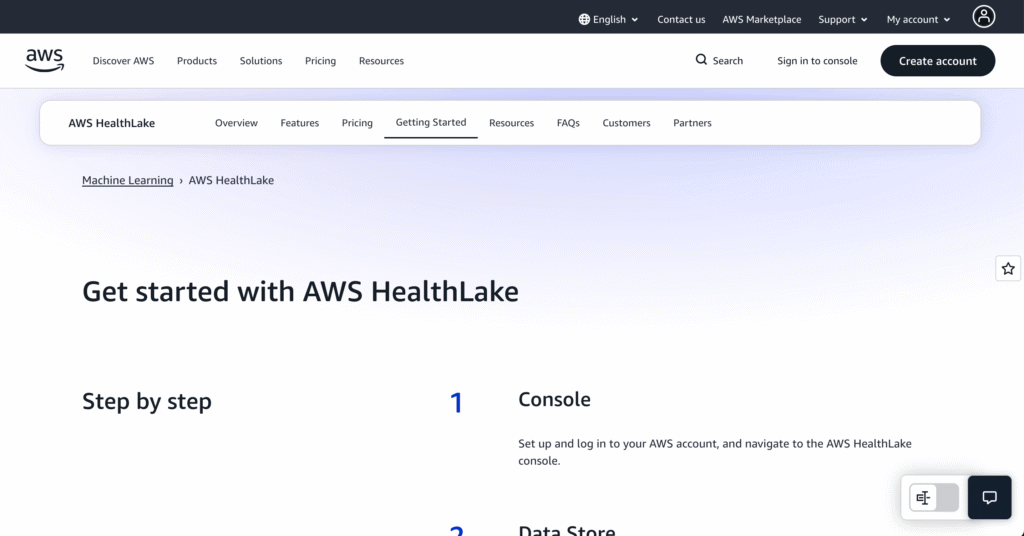
AWS HealthLake is a fully managed health data platform designed to store, transform, and analyze clinical data at scale using AI and machine learning.
Key capabilities
- Secure storage and normalization of structured and unstructured clinical data
- Built‑in support for FHIR and interoperability requirements
- Integration with AWS AI/ML services (e.g., Amazon Comprehend Medical) for NLP and prediction
- Tools to build predictive models and population health analytics
- Designed for scalability across enterprise and multi‑site deployments
Best for:
Healthcare organizations building on AWS that need a centralized health data lake with AI/ML capabilities for clinical and operational analytics.
7. Microsoft Dragon Copilot
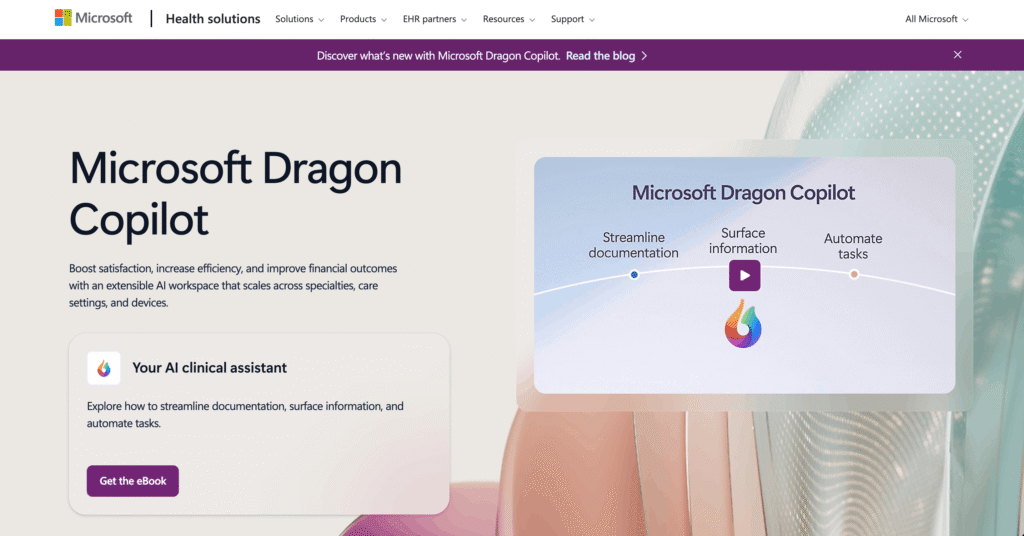
Microsoft Dragon Copilot is one of the most advanced clinician‑facing AI platforms today, embedded into Microsoft’s broader healthcare and cloud ecosystem. It aims to reduce documentation burden and support clinicians in everyday practice.
Key capabilities
- AI‑powered clinical documentation assistance embedded in workflows.
- Real‑time support for capturing patient encounters and generating notes
- Integration with Microsoft 365 and Azure healthcare services.
- Designed to reduce administrative load and clinician burnout
- Enterprise deployment model aligned with health system IT and security needs
Best for:
Health systems standardizing on the Microsoft ecosystem that want AI‑driven clinical documentation and workflow support at enterprise scale.
8. Arcadia
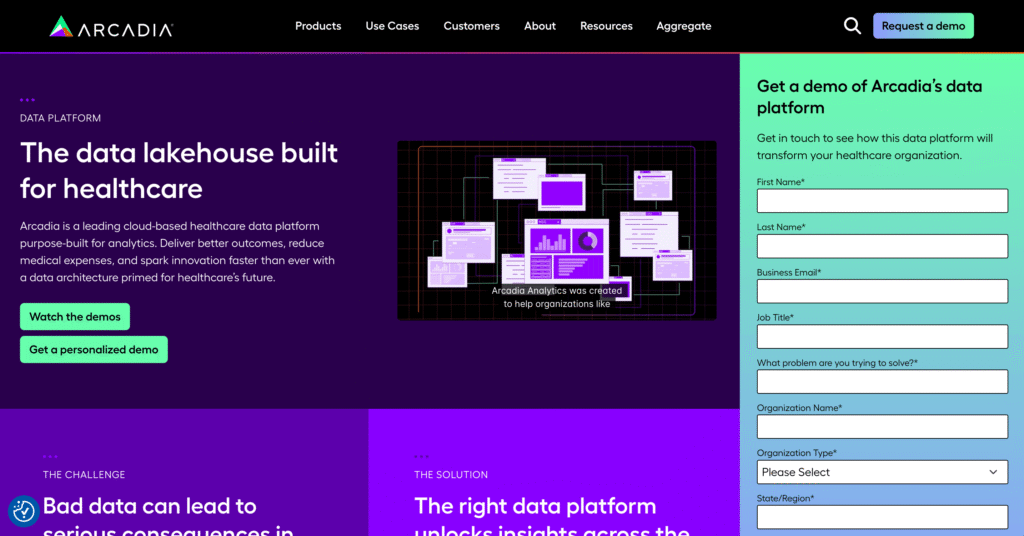
Arcadia is a leading healthcare data platform with AI tools for aggregating, normalizing, and analyzing data at scale. Its AI development tools are used by healthcare leaders to unlock the value of clinical and claims data for analytics and decision support.
Key capabilities
- Unified platform for data acquisition and aggregation across multiple sources.
- Analytics and AI tools for population health, quality, and financial performance.
- Support for streamlining administrative tasks and clinician workflows using AI.
- Focus on helping organizations address financial challenges, workforce shortages, and health equity through analytics.
- Designed to serve payers, providers, and value‑based care organizations
Best for:
Enterprises that need a mature healthcare analytics and AI platform to power value‑based care, population health, and performance improvement.
9. TeleVox & Leading Healthcare Chatbot Platforms
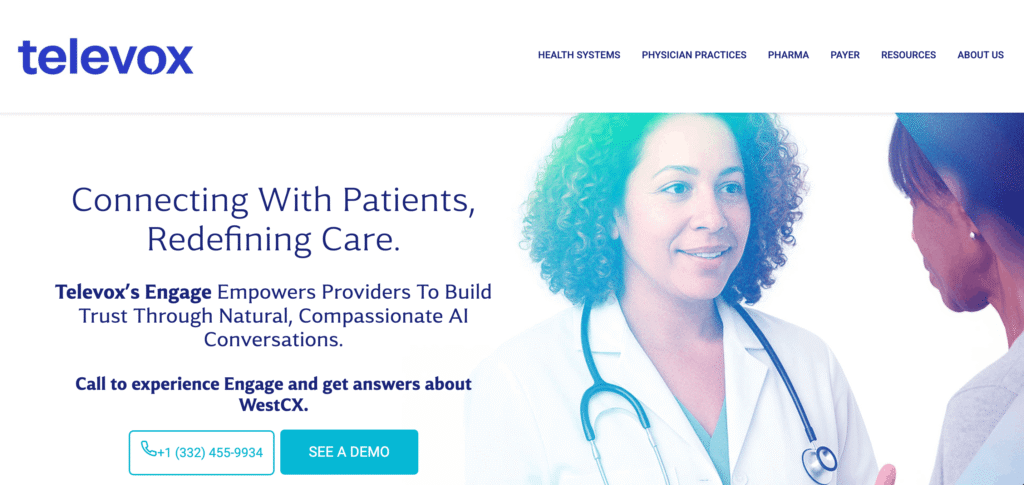
TeleVox and similar platforms (e.g., Kore HealthAssist, Ada Health, Hyro, Sensely) provide enterprise‑grade conversational AI for patient engagement and communication. They focus on omnichannel experiences that integrate tightly with healthcare systems.
Key capabilities
- AI‑driven virtual agents to answer patient questions using authorized clinical content.
- Voice and text interactions for scheduling, triage, and basic support.
- Integration with existing systems and EHRs for seamless patient experiences.
- Chronic disease monitoring and symptom checking (e.g., Sensely’s virtual assistant)
- 24/7 availability to improve access, engagement, and responsiveness
Best for:
Healthcare enterprises that want scalable conversational AI for patient engagement, contact centers, and front‑door digital experiences.
How Healthcare Enterprises Should Think About AI Platforms
For healthcare leaders, the key questions are less about individual algorithms and more about platform fit:
- Can this system integrate with our EHR, imaging, and data infrastructure securely?
- Does it meaningfully reduce clinician burden and operational friction, not just add another interface?
- Is it designed for enterprise governance, compliance, and observability?
Most platforms in this list specialize by layer:
- Clinical & imaging AI: Tempus, Aidoc, Microsoft Dragon Copilot
- Data & analytics backbone: Google Cloud Healthcare, AWS HealthLake, Arcadia
- Patient engagement & front door: TeleVox and chatbot platforms
- Model and orchestration: OpenAI for Healthcare at the model layer, and WorkLLM at the workflow and collaboration layer.
WorkLLM sits on top of these capabilities as a multi‑LLM, team‑centric workspace where healthcare organizations can:
- Encode best‑practice workflows into reusable AI Tools and Assistants
- Orchestrate tasks via AI Agents that respect organizational structure and guardrails
- Provide a unified AI experience for different roles and departments, rather than fragmented use across point solutions
Author Details

Product-focused founder with deep experience in AI, enterprise software, and data platforms. Passionate about turning complex workplace problems into simple, scalable products.