Enterprise AI search has become a strategic priority as organizations deal with information fragmentation across Slack, Google Drive, Jira, Notion, and dozens of internal systems.
Glean has emerged as a leader in enterprise search by indexing content across tools and making it discoverable through AI-powered retrieval. It is particularly strong at surfacing answers quickly across disconnected systems.
However, as AI adoption matures, many organizations begin evaluating alternatives. Some require deeper workflow integration. Others want multi-model flexibility, structured memory, or AI collaboration beyond search.
Here are seven strong Glean alternatives and competitors to consider.
1. WorkLLM
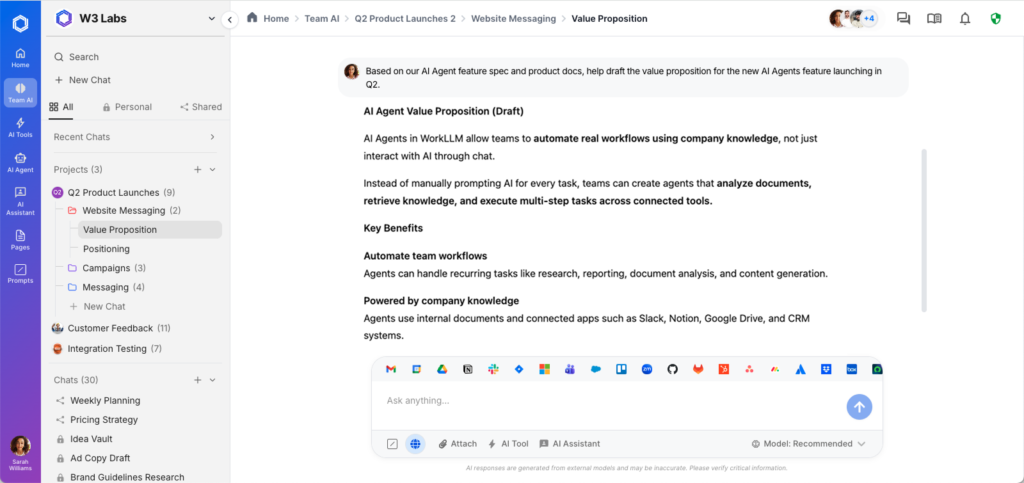
WorkLLM is positioned as a team-native AI workspace rather than a pure enterprise search platform. While Glean focuses primarily on retrieval, WorkLLM integrates multi-model AI access, shared memory architecture, and workflow orchestration into a unified environment.
It is designed for teams that want AI embedded into how they collaborate and execute, not just how they search.
Strengths
- Multi-LLM access in one workspace
- Layered memory across threads, projects, and organization
- Structured collaboration instead of isolated search
- Workflow integration beyond retrieval
Best for
Enterprise teams that need shared AI workflows, structured memory across projects, and coordinated execution beyond search.
2. Microsoft Copilot
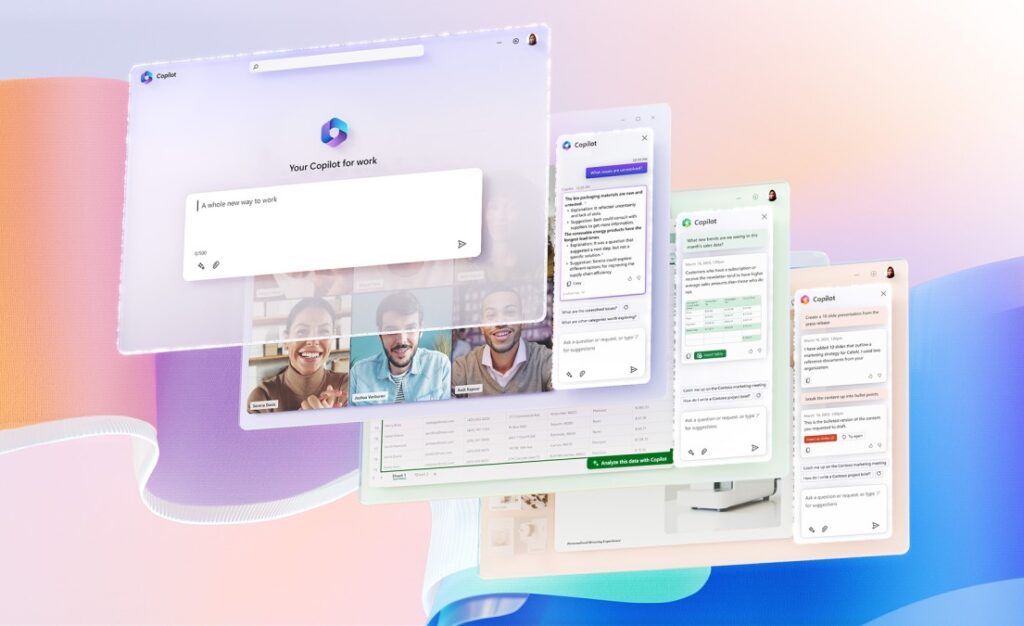
Microsoft Copilot is deeply integrated into Microsoft 365 applications including Word, Excel, PowerPoint, Outlook, and Teams. It enhances document-level and communication-level intelligence directly inside enterprise workflows.
For organizations standardized on Microsoft, Copilot reduces friction within documents, meetings, and internal communications.
Strengths
- Native integration inside Microsoft tools
- Enterprise-grade governance and compliance controls
- Strong contextual assistance within workflows
Best for
Teams that primarily use Microsoft 365 products.
3. Google Gemini for Workspace
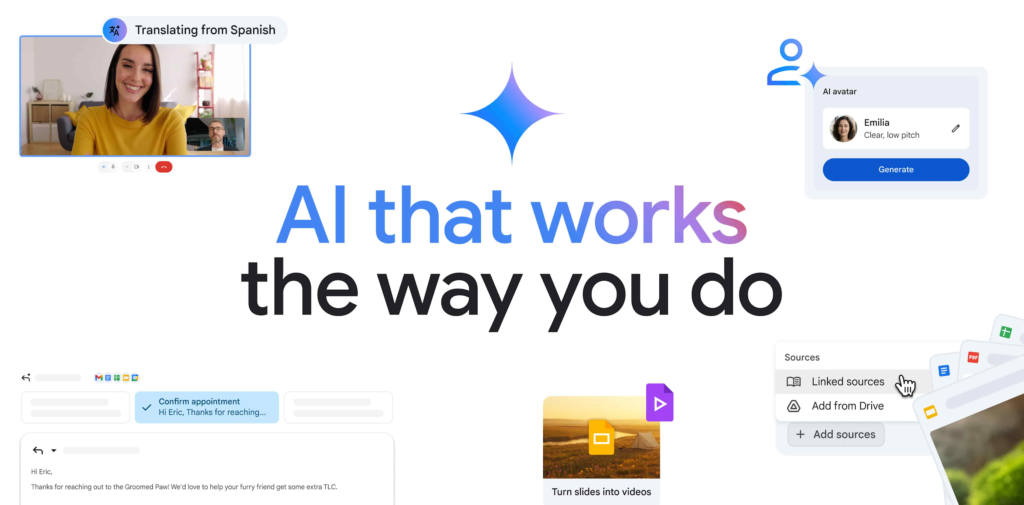
Google Gemini enhances contextual assistance and AI-powered support inside Google Workspace applications such as Docs, Sheets, Gmail, and Drive.
For organizations heavily invested in Google Workspace, Gemini provides seamless AI capabilities within existing collaboration tools.
Strengths
- Seamless integration with Google Workspace
- Real-time document and email assistance
- Centralized admin controls within Workspace
Best for
Teams that primarily use Google Workspace products.
4. Elastic Enterprise Search
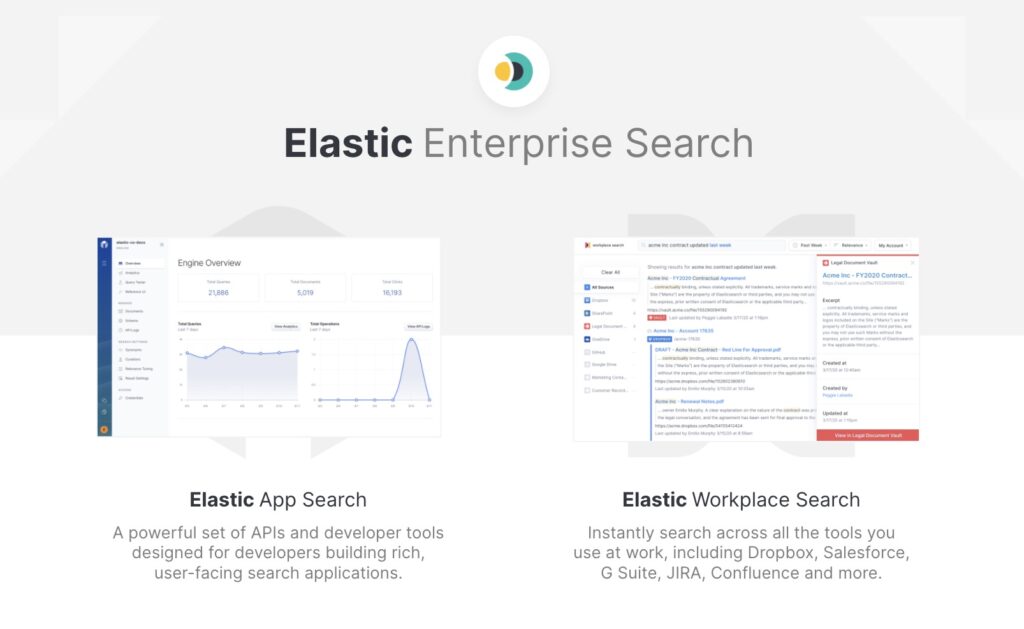
Elastic offers a customizable enterprise search infrastructure built on the Elastic Stack. It supports indexing, filtering, and search experiences across a wide range of data sources.
Elastic is commonly selected by organizations that require deeper technical control over search architecture and deployment.
Strengths
- Highly customizable search infrastructure
- Scalable indexing and querying architecture
- Flexible deployment options
Best for
Technical enterprises require full control over search implementation.
5. Coveo
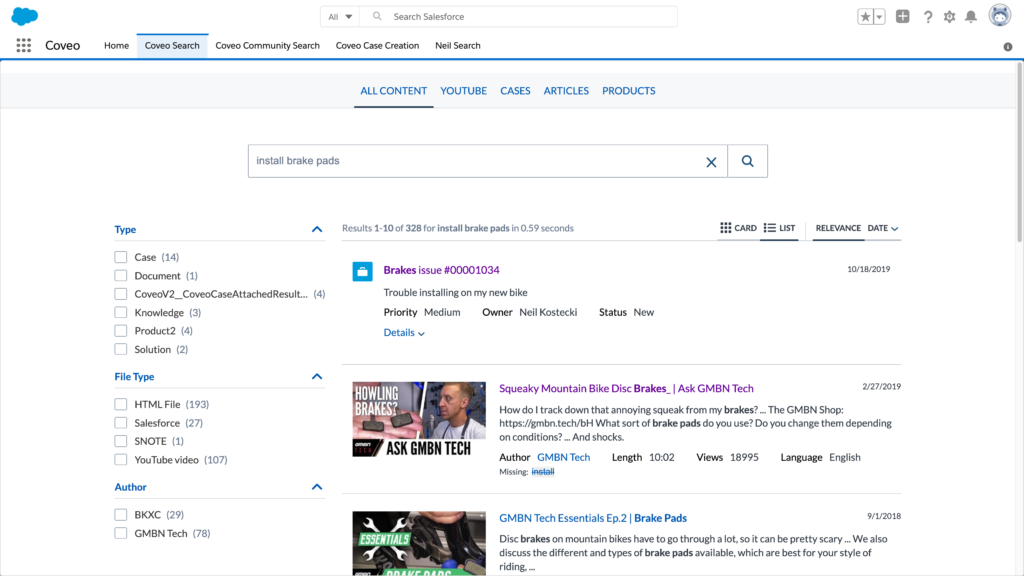
Coveo focuses on AI-driven relevance, personalization, and enterprise search experiences. It is widely used in knowledge-heavy environments where precision and personalization are critical.
Coveo emphasizes relevance ranking and intelligent recommendations across digital and internal experiences.
Strengths
- Strong AI-driven relevance ranking
- Enterprise scalability
- Personalization and recommendation capabilities
Best for
Knowledge-heavy enterprises that prioritize search relevance and personalization.
6. Algolia
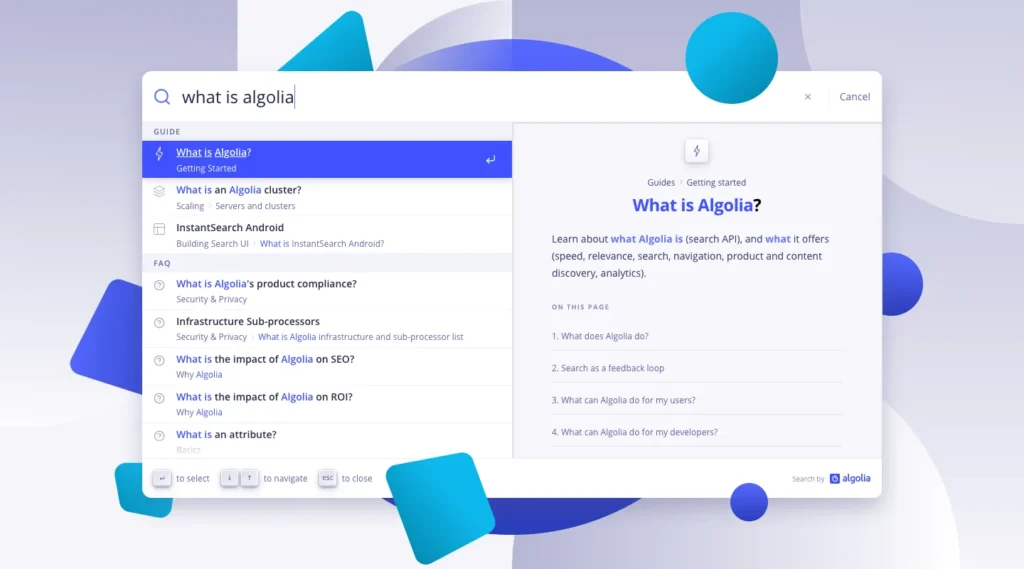
Algolia is a developer-first search platform known for performance, speed, and API flexibility. It is frequently used to power internal search systems and customer-facing applications.
Algolia enables teams to build customized search experiences with fine-grained control over indexing and ranking.
Strengths
- High-speed indexing and query performance
- API-driven flexibility
- Developer-friendly architecture
Best for
Technical enterprises building custom search experiences.
7. Coworker AI
Coworker.ai positions itself as an AI teammate for complex work. It connects multiple workplace tools and enables teams to ask questions, coordinate work, and automate workflows across systems such as Slack, Jira, and GitHub.
Coworker AI focuses on cross-tool intelligence and workflow automation rather than search alone.
Strengths
- Connects leading workplace tools
- Workflow automation across work systems
- AI assistance embedded into team collaboration
Best for
Teams wanting cross-tool answers and workflow automation.
Summary Comparison Table
| Platform | Core Positioning | Enterprise Search | Team Intelligence Layer | Multi-Model Access | AI Execution Layer |
|---|---|---|---|---|---|
| WorkLLM | AI workspace & orchestration | Moderate | High (Layered memory + collaboration) | Yes | Full (Tools, Assistants, Agents) |
| Microsoft Copilot | Embedded productivity AI | Moderate | Moderate (within M365) | Limited | Assistants + ecosystem agents |
| Google Gemini | Workspace AI assistance | Moderate | Moderate (within Workspace) | Limited | Workspace-based assistants |
| Elastic | Custom enterprise search | High | Low | Custom | None |
| Coveo | AI relevance search | High | Low | Limited | None |
| Algolia | API-based search infrastructure | High | Low | Custom | None |
| Coworker AI | AI teammate & workflow automation | Moderate | Moderate | Platform-dependent | Assistants + workflow automation |
Choosing the Right Alternative
If your organization’s primary challenge is retrieving information across disconnected tools, search-first platforms like Elastic, Coveo, or Algolia may address that need effectively.
However, many enterprises discover that retrieval is only the starting point. The larger question becomes how information translates into coordinated action across teams.
Glean and other search platforms focus on surfacing answers. Platforms like WorkLLM extend beyond retrieval by combining shared memory, multi-model access, and workflow execution within a unified workspace.
As enterprise AI matures, the strategic shift is moving from search optimization to structured execution. The right alternative depends on whether you are solving for better answers or better coordination.
Author Details

Manoj is a Project Development Manager known for his innovative problem-solving skills and passion for technology. Versed in multiple programming languages, he has worked on a wide range of projects, from enterprise-level software to mobile apps. A strong advocate for teamwork, Manoj thrives in collaborative settings and is always keen to embrace new technologies.