Enterprise AI has shifted from experimentation to structured deployment. Organizations are no longer evaluating AI tools solely for content generation. They are assessing platforms that integrate with internal systems, enforce governance, and support coordinated execution across teams.
The best enterprise AI platforms typically combine model access, security controls, workflow integration, and collaboration capabilities.
Here are nine leading enterprise AI platforms to evaluate.
1. WorkLLM
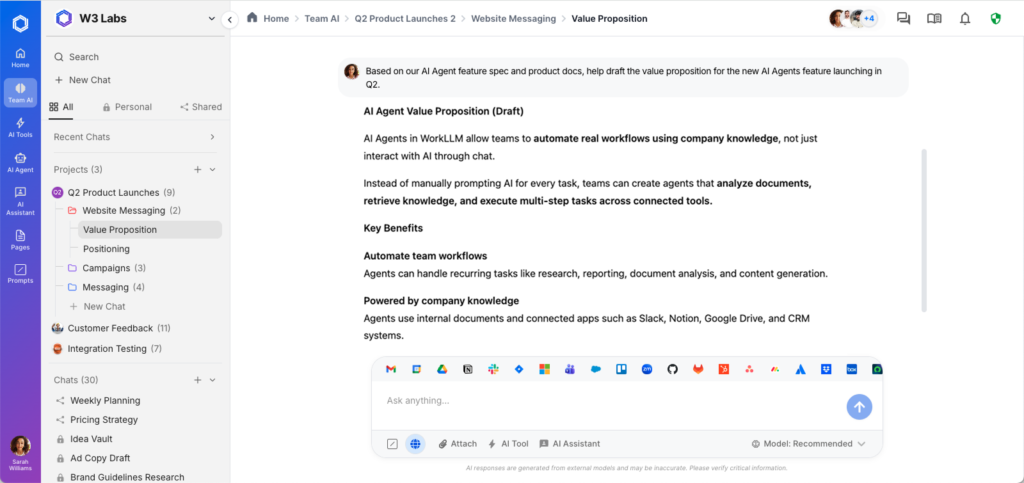
WorkLLM is designed as a unified AI workspace for enterprise teams. It integrates multi-model access with layered memory, team collaboration, and execution layers such as AI Tools, AI Assistants, and AI Agents. Rather than focusing only on chat or search, WorkLLM emphasizes structured workflows and cross-functional coordination.
Strengths
- Multi-LLM access in one workspace
- Layered memory across threads, projects, and organization
- AI Tools for repeatable workflows
- AI Assistants and AI Agents for execution
Best for
Enterprises that want coordinated team workflows and structured AI execution beyond basic chat.
2. ChatGPT Enterprise
ChatGPT Enterprise is OpenAI’s enterprise offering focused on secure, scalable deployment of ChatGPT across organizations. OpenAI positions it around data controls, encryption, SOC 2 alignment, and admin capabilities such as SSO and usage insights for large-scale rollout.
Strengths
- Enterprise admin console with SSO and usage insights
- Stated no training on business data for Enterprise
- Enterprise privacy controls and retention controls described by OpenAI
Best for
Enterprises seeking a general-purpose AI platform with strong governance controls.
3. Claude Enterprise
Claude Enterprise is Anthropic’s enterprise deployment of Claude, often evaluated for deep reasoning and document-heavy workflows. Anthropic highlights enterprise controls such as compliance dashboard integrations and configurable data retention, and publishes documentation around custom data retention controls for enterprise plans.
Strengths
- Enterprise admin controls and compliance-oriented capabilities
- Custom data retention controls for enterprise plans
- Optional Zero Data Retention for eligible Claude API usage (as documented)
Best for
Enterprises with heavy document analysis, research, policy, or long-context workflows.
4. Microsoft Copilot (Microsoft 365)
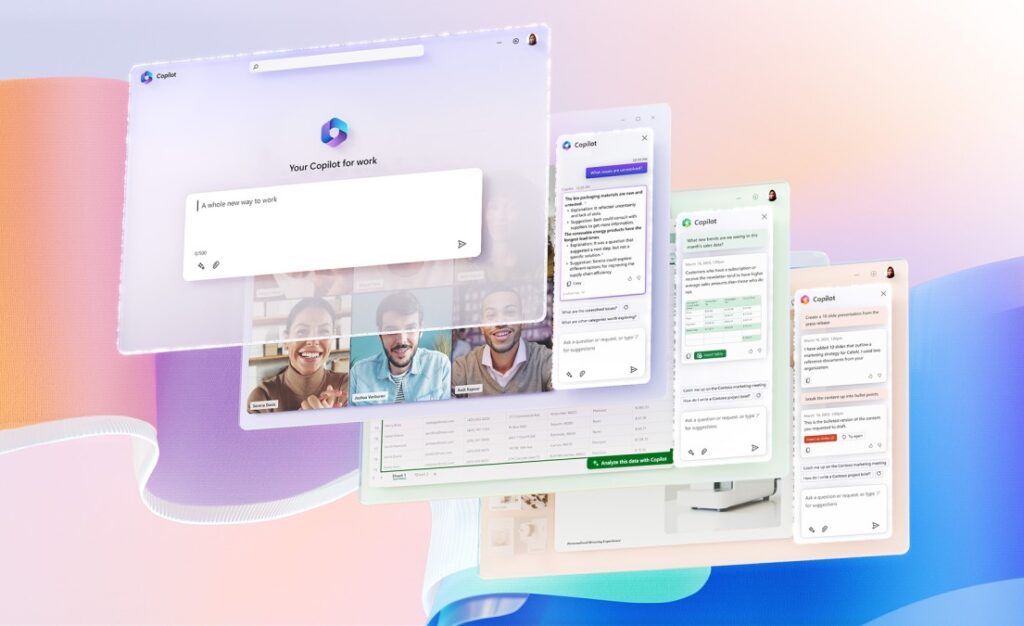
Microsoft Copilot is embedded across Microsoft 365, including Word, Excel, PowerPoint, Outlook, and Teams. Microsoft also describes the Copilot Control System as a framework for governance, management controls, and measurement for Copilot and agents.
Strengths
- Deep integration with Microsoft 365 workflows
- Enterprise governance framing via Copilot Control System
- Strong productivity use cases inside core Microsoft apps
Best for
Organizations standardized on Microsoft 365.
5. Google Gemini Enterprise
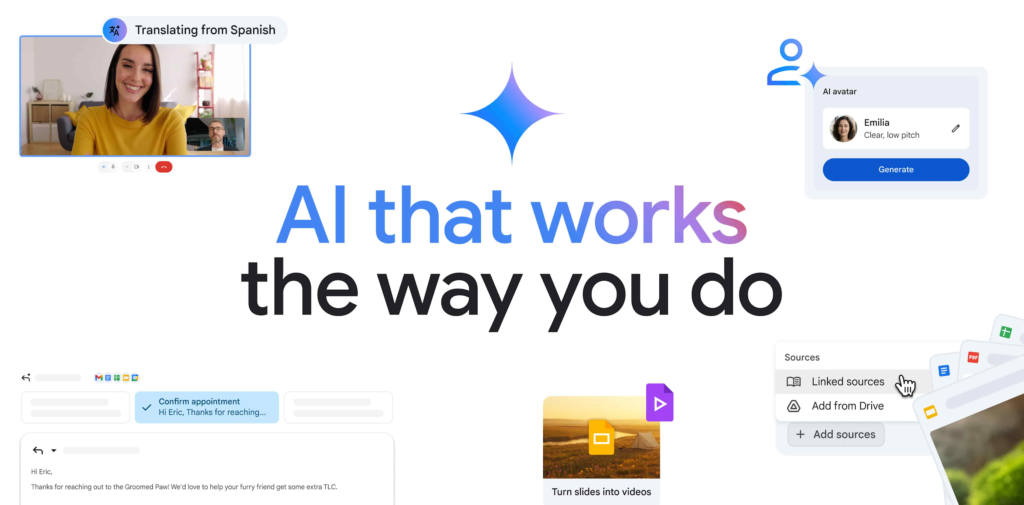
Gemini Enterprise is Google’s enterprise AI offering across Workspace, with Google documenting that Gemini for Workspace interactions remain within the organization’s domain and are governed by Workspace admin controls. Google also describes identity/access controls and connector indexing controls for Gemini Enterprise.
Strengths
- Embedded AI in Google Workspace collaboration workflows
- Workspace governance and data protections described by Google
- Identity/access and connector indexing controls described for Gemini Enterprise
Best for
Enterprises standardized on Google Workspace and Google Cloud.
6. Coworker.ai
Coworker AI positions itself as “enterprise AI for complex work,” emphasizing cross-tool automation and the ability to answer questions, plan, and complete tasks across connected workplace systems. It highlights integrations across many tools and presents itself as a team AI layer.
Strengths
- Cross-tool integrations (positioned across 40+ tools)
- Focus on complex work, analysis, and task completion across systems
- Workflow and task automation positioning
Best for
Enterprises seeking AI coordination and automation across multiple work tools.
7. Langdock
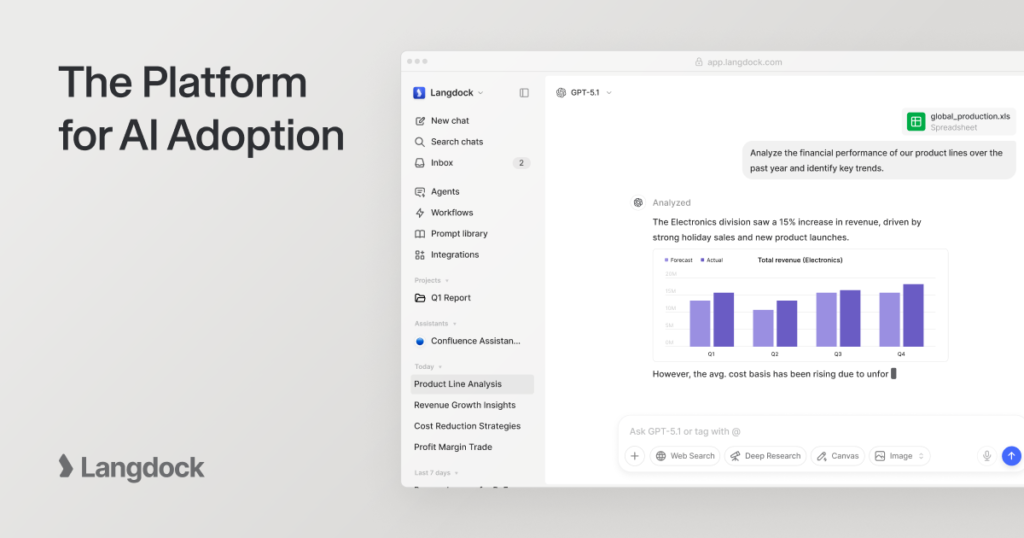
Langdock positions itself as “the platform for AI adoption,” emphasizing safe and flexible rollout of AI across organizations. Its enterprise page highlights scaled adoption and controlled environments for both daily AI use and advanced use cases.
Strengths
- Enterprise AI adoption platform framing
- Emphasis on controlled, secure rollout at scale
- Company-wide deployment positioning
Best for
Enterprises seeking a centralized platform to roll out AI adoption across the workforce.
8. Nexos.ai
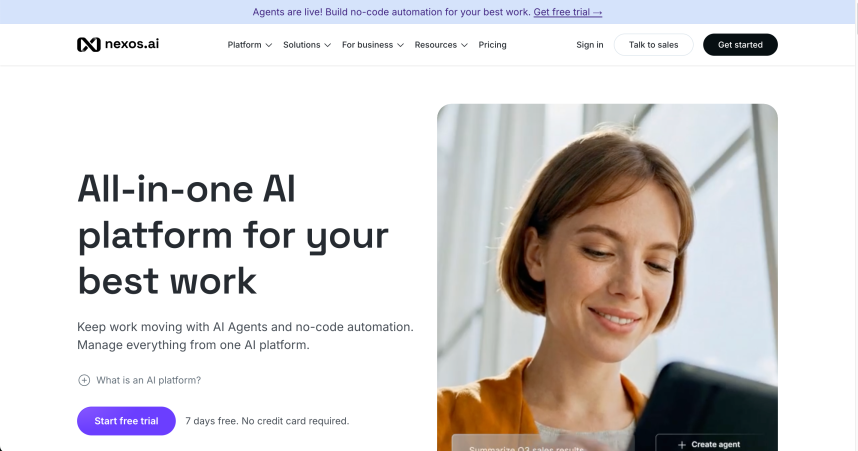
nexos.ai positions itself as an “all-in-one AI platform” and explicitly describes itself as model-agnostic, supporting hundreds of models across major providers. It emphasizes routing and reliability features such as fallback and load balancing for enterprise AI workflows.
Strengths
- Model-agnostic platform positioning with broad model support
- Reliability features like automated fallback and load balancing
- Unified interface for managing multiple models and providers
Best for
Enterprises managing multi-model AI deployments and needing routing, resilience, and control.
9. Abacus.ai
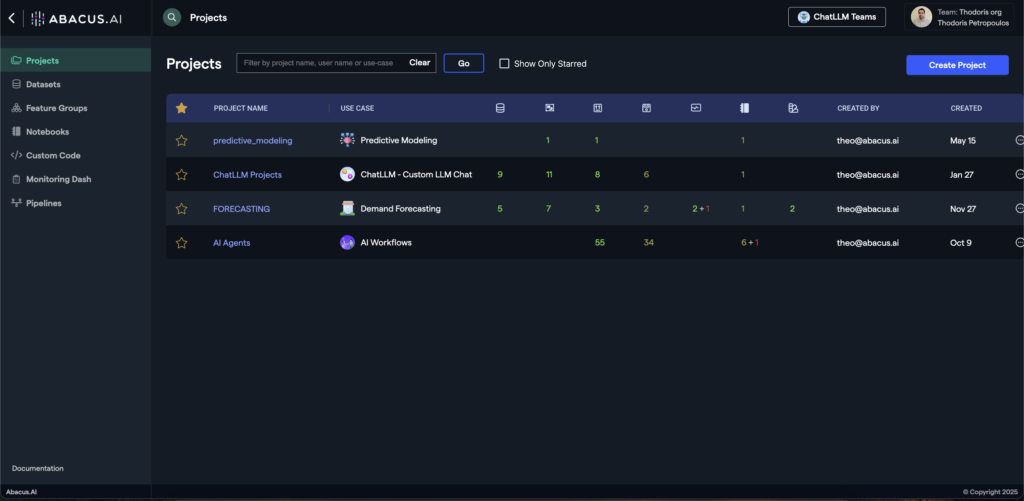
Abacus.AI positions itself around an “AI super assistant” and an enterprise GenAI platform, highlighting AI workflows, agents, and building applied AI systems like custom chatbots and automation.
Strengths
- Enterprise “AI Brain / AI super assistant” positioning
- Emphasis on GenAI workflows, agents, and applied AI systems
- Broad enterprise use case positioning (chatbots, workflows, data analysis)
Best for
Enterprises looking for a broad applied AI platform with assistants, workflows, and AI system building.
Summary Comparison Table
| Platform | Core Positioning | Enterprise Governance | Multi-Model Access | Team Collaboration | AI Execution Layer |
|---|---|---|---|---|---|
| WorkLLM | AI workspace & orchestration | Yes | Yes | High | Full (Tools, Assistants, Agents) |
| ChatGPT Enterprise | General-purpose enterprise AI | Yes | Limited | Moderate | Assistants + workspace features |
| Claude Enterprise | Enterprise AI for deep analysis | Yes | Limited | Moderate | Assistants + enterprise controls |
| Microsoft Copilot | Microsoft 365 embedded AI | Yes | Limited | High (within M365) | Assistants + ecosystem agents |
| Google Gemini Enterprise | Workspace-embedded AI | Yes | Limited | High (within Workspace) | Workspace-based assistants |
| Coworker.ai | Cross-tool AI for complex work | Yes (positioned) | Platform-dependent | Moderate to High | Assistants + workflow automation |
| Langdock | Platform for AI adoption | Yes (positioned) | Yes (varies by setup) | Moderate | Adoption platform + advanced use cases |
| Nexos.ai | Model-agnostic AI operating layer | Yes (positioned) | Yes | Low | Routing, resilience, and control |
| Abacus.ai | Enterprise applied AI + super assistant | Yes (positioned) | Yes (positioned) | Low to Moderate | Workflows, agents, applied AI systems |
Choosing the Right Enterprise AI Platform
Enterprise AI decisions are increasingly architectural rather than feature-driven.
Copilot and Gemini strengthen productivity within their respective ecosystems. ChatGPT Enterprise and Claude Enterprise provide secure, model-centric intelligence. Infrastructure-focused platforms address routing, governance, and large-scale deployment.
However, as AI adoption expands across departments, the core challenge shifts from selecting a powerful model to coordinating how intelligence operates across teams.
Model capability, governance, and deployment controls are essential. What ultimately determines long-term value is whether AI usage is unified or fragmented across the organization.
This is where orchestration platforms like WorkLLM become strategically important. Rather than functioning as another model layer, WorkLLM provides a shared workspace that integrates multi-model access, structured memory, and execution workflows under consistent governance.
The strongest enterprise AI strategy is not defined by a single platform selection. It is defined by how effectively intelligence is structured across people, projects, and systems.
Author Details

Product-focused founder with deep experience in AI, enterprise software, and data platforms. Passionate about turning complex workplace problems into simple, scalable products.