As organizations scale, HR and Operations teams face increasing complexity in managing talent, workflows, and operational processes. Traditional tools often create silos, while manual processes become bottlenecks to growth.
AI platforms designed for HR and Operations are transforming how these teams work—from automated candidate screening and employee engagement to intelligent workflow orchestration and data-driven decision making.
Here are eight leading AI platforms that are reshaping HR and Operations in 2026.
1. WorkLLM
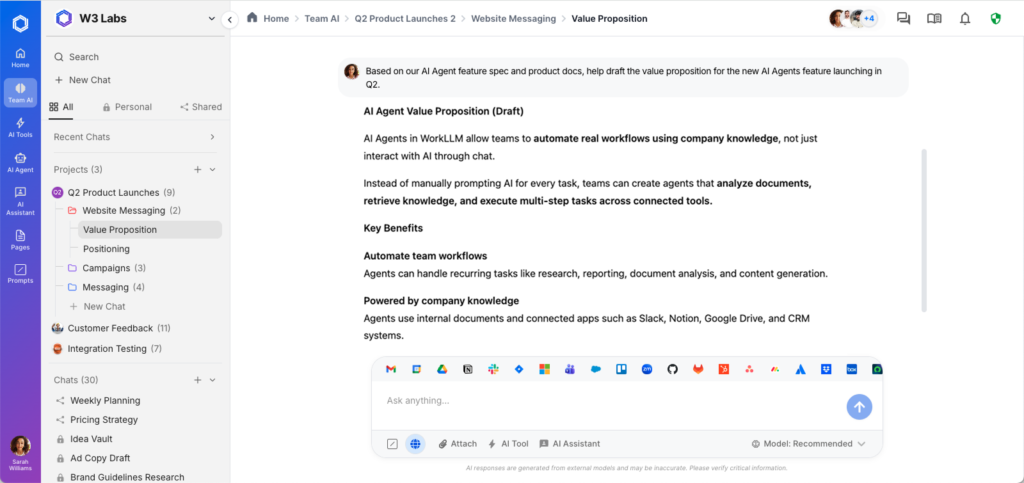
WorkLLM is positioned as a multi-LLM AI workspace built for teams, including HR and Operations functions. Unlike specialized point solutions, WorkLLM enables HR and Operations teams to access multiple foundation models within a shared environment while maintaining structured memory, collaboration, and execution layers.
Rather than limiting AI to specific HR or ops tasks, WorkLLM integrates model flexibility with workflow execution and cross-functional coordination.
Strengths
- Multi-LLM access for diverse HR and ops use cases
- Layered memory across projects, teams, and processes
- AI Tools for repeatable HR and operational workflows
- AI Assistants and AI Agents for complex process execution
- Cross-functional collaboration between HR, ops, and other teams
Best for HR and Operations teams that want multi-model flexibility combined with structured collaboration and the ability to build custom workflows across functions.
2. BambooHR with AI
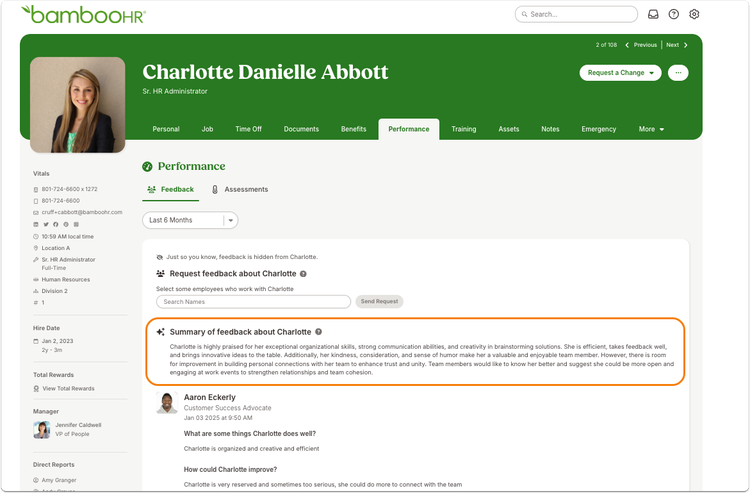
BambooHR has integrated AI capabilities into its core HR platform, focusing on employee lifecycle management, performance tracking, and HR analytics. The platform uses AI to automate routine HR tasks and provide predictive insights about employee engagement and retention.
Strengths
- Integrated AI within established HR workflows
- Predictive analytics for employee retention
- Automated candidate screening and onboarding
- Performance management insights
Best for Mid-size companies that want AI-enhanced HR management within a traditional HRIS framework.
3. Workday with Workday AI
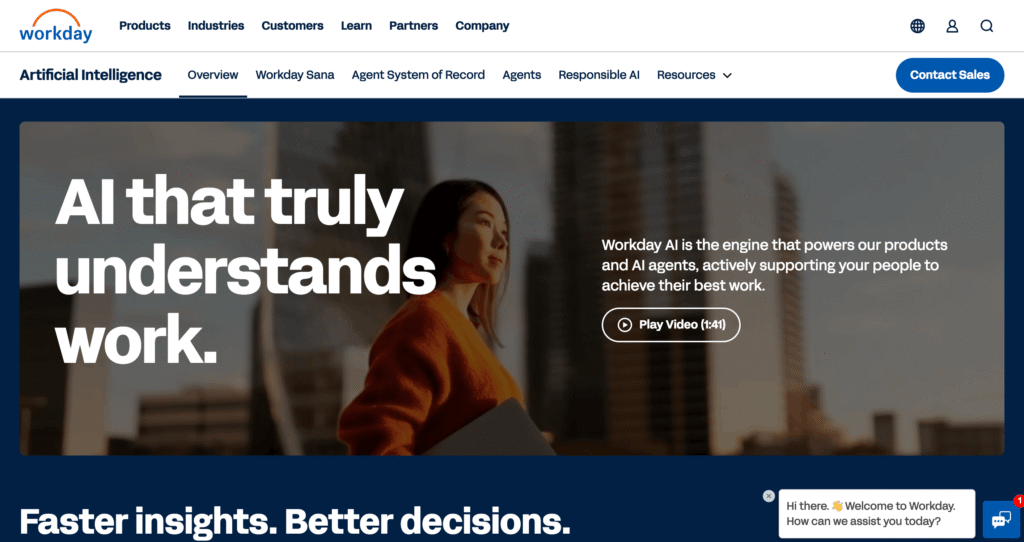
Workday has embedded AI across its enterprise platform, particularly strong in financial operations, workforce planning, and HR analytics. Workday AI provides intelligent recommendations for hiring, budget optimization, and operational efficiency.
Strengths
- Enterprise-scale AI integration
- Strong financial and workforce analytics
- Automated compliance and reporting
- Predictive workforce planning
Best for Large enterprises that need AI-powered insights across HR, finance, and operations within a unified platform.
4. Paradox (Olivia AI)
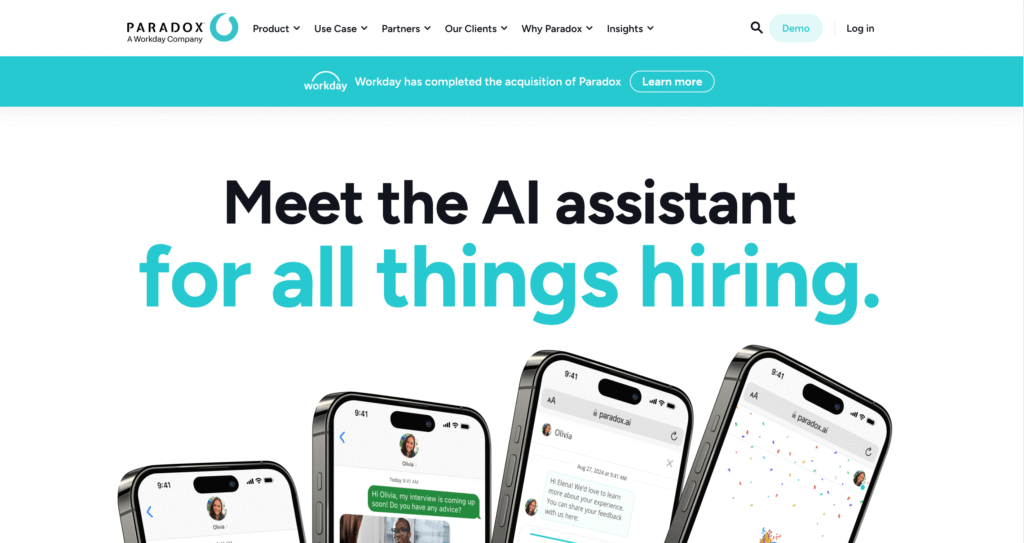
Paradox focuses specifically on recruitment and hiring automation through its AI assistant Olivia. The platform automates candidate communication, interview scheduling, and initial screening processes.
Strengths
- Specialized recruitment automation
- Conversational AI for candidate experience
- Integration with major job boards and ATS systems
- High-volume hiring optimization
Best for Organizations with high-volume hiring needs that want to automate recruitment workflows.
5. Eightfold AI
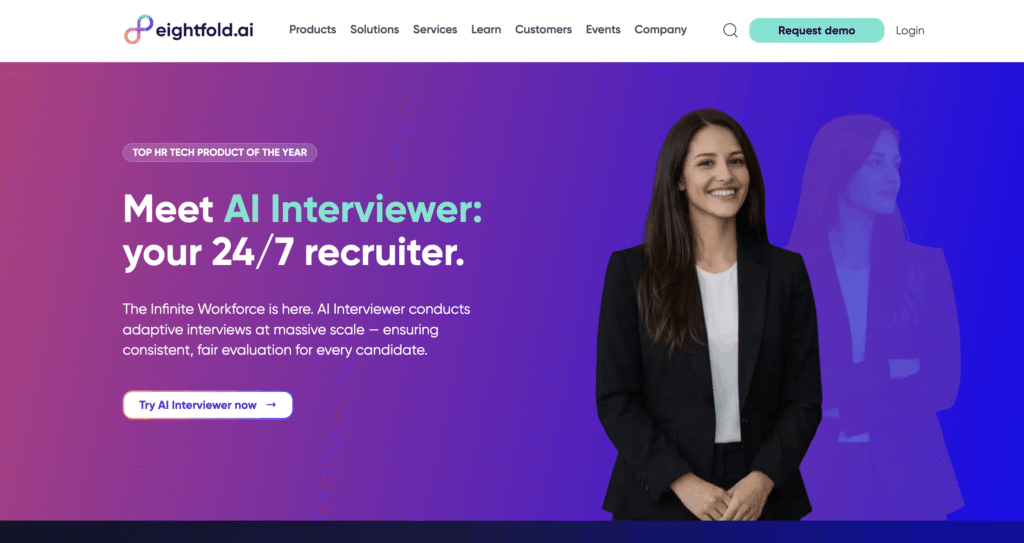
Eightfold AI provides talent intelligence and workforce optimization using deep learning. The platform focuses on talent acquisition, retention, and internal mobility by analyzing skills, performance, and career trajectories.
Strengths
- Deep learning for talent matching
- Skills-based workforce planning
- Internal mobility optimization
- Diversity and inclusion insights
Best for Enterprises focused on strategic talent management and skills-based workforce transformation.
6. Monday.com with AI
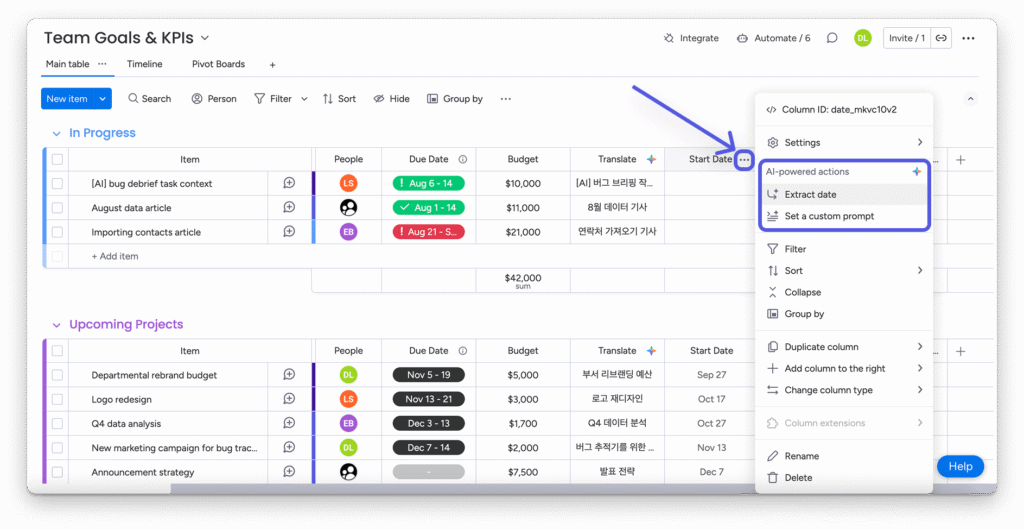
Monday.com has integrated AI capabilities into its work operating system, particularly useful for Operations teams managing projects, workflows, and cross-functional coordination. The AI features include automated task assignment, progress prediction, and workflow optimization.
Strengths
- AI-enhanced project and workflow management
- Automated task routing and assignment
- Predictive project timelines
- Cross-team collaboration tools
Best for Operations teams that need AI-powered workflow management and cross-functional project coordination.
7. UiPath
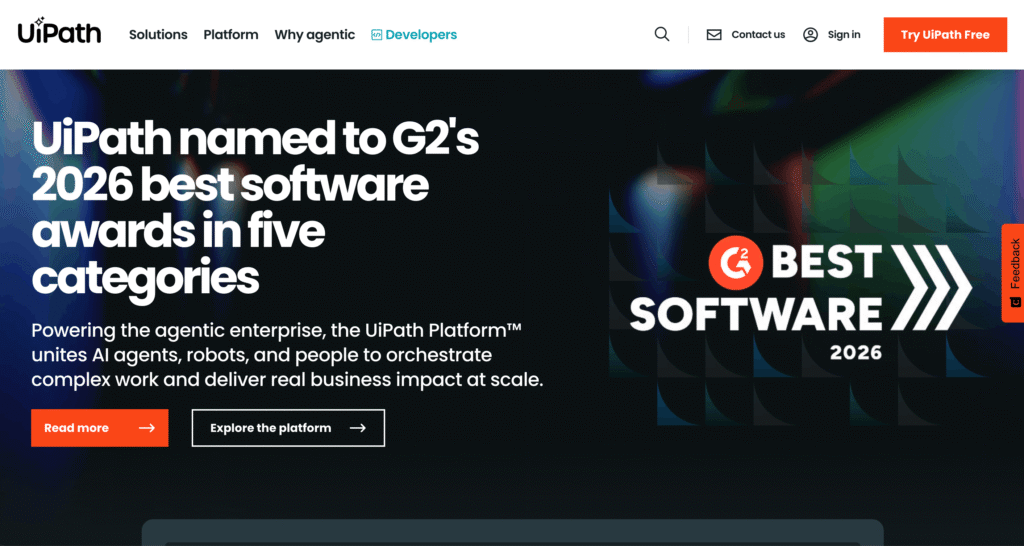
UiPath specializes in robotic process automation (RPA) with AI capabilities, particularly strong for Operations teams automating repetitive tasks across HR, finance, and administrative functions.
Strengths
- Advanced process automation
- AI-powered document processing
- Integration with existing enterprise systems
- Scalable automation deployment
Best for Operations teams focused on automating high-volume, repetitive processes across multiple business functions.
8. Lattice
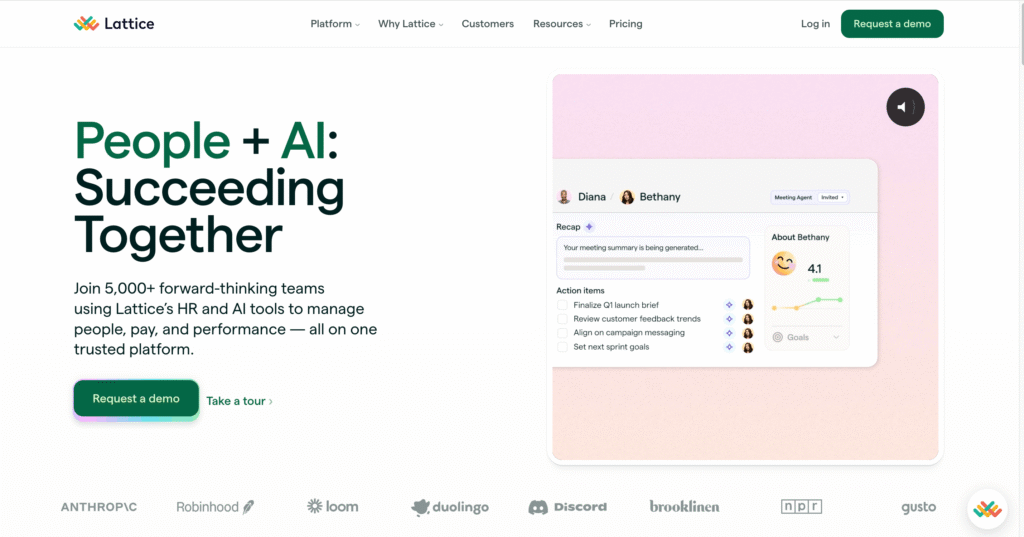
Lattice combines performance management with AI-driven insights for employee engagement, goal tracking, and organizational development. The platform uses AI to identify performance patterns and recommend interventions.
Strengths
- AI-enhanced performance management
- Employee engagement analytics
- Goal alignment and tracking
- Organizational development insights
Best for HR teams focused on performance management and employee development with data-driven insights.
Summary Comparison Table
| Platform | Core Positioning | HR Focus | Operations Focus | AI Capabilities | Team Collaboration |
|---|---|---|---|---|---|
| WorkLLM | Multi-LLM AI workspace | High | High | Full (Multi-model access) | High |
| BambooHR | HR platform with AI | High | Low | Moderate | Limited |
| Workday | Enterprise platform | High | High | High | Moderate |
| Paradox | Recruitment automation | High (Hiring) | Low | Moderate | Limited |
| Eightfold AI | Talent intelligence | High | Low | High | Limited |
| Monday.com | Work operating system | Moderate | High | Moderate | High |
| UiPath | Process automation | Moderate | High | High | Low |
| Lattice | Performance management | High | Low | Moderate | Moderate |
Choosing the Right AI Platform for HR & Operations
The AI landscape for HR and Operations is rapidly evolving beyond point solutions toward integrated platforms that support cross-functional workflows.
Traditional specialized tools excel in specific domains—Paradox for recruitment, UiPath for automation, Lattice for performance management. However, modern HR and Operations teams increasingly need platforms that support diverse use cases and cross-functional collaboration.
Some platforms focus primarily on automation within existing workflows. Others emphasize analytics and insights. A smaller group combines multi-model AI access with structured collaboration and execution capabilities.
If your objective is automating specific HR or operational processes, specialized platforms may be sufficient. If your objective is building AI-powered workflows that span across HR, Operations, and other business functions, the architecture matters.
WorkLLM is designed for the latter approach. It brings multi-LLM flexibility into a shared workspace with structured memory and execution layers, enabling HR and Operations teams to build custom workflows while collaborating effectively with other departments.
As enterprise AI adoption matures in HR and Operations, the question is no longer whether you need AI tools. It is how effectively your organization can operationalize AI across diverse functions and use cases.
Author Details

Product-focused founder with deep experience in AI, enterprise software, and data platforms. Passionate about turning complex workplace problems into simple, scalable products.