
Executive teams face unprecedented complexity in today’s business environment: accelerating market changes, data-driven decision requirements, and the need to orchestrate cross-functional initiatives while maintaining strategic oversight. Traditional executive workflows often create information bottlenecks, with leaders spending excessive time on data gathering, report synthesis, and coordination tasks rather than focusing on high-level strategy and decision-making. The integration of AI platforms has become essential for maintaining competitive advantage and operational efficiency at the executive level.
AI-powered executive platforms are transforming how leadership teams operate, offering capabilities from intelligent data synthesis and automated reporting to comprehensive strategic analysis and predictive insights. These platforms don’t just automate individual tasks—they create intelligent decision-support ecosystems that learn from organizational patterns and optimize entire executive workflows for better strategic outcomes.
Here are seven leading AI platforms that are reshaping executive effectiveness and strategic decision-making in 2026.
1. WorkLLM
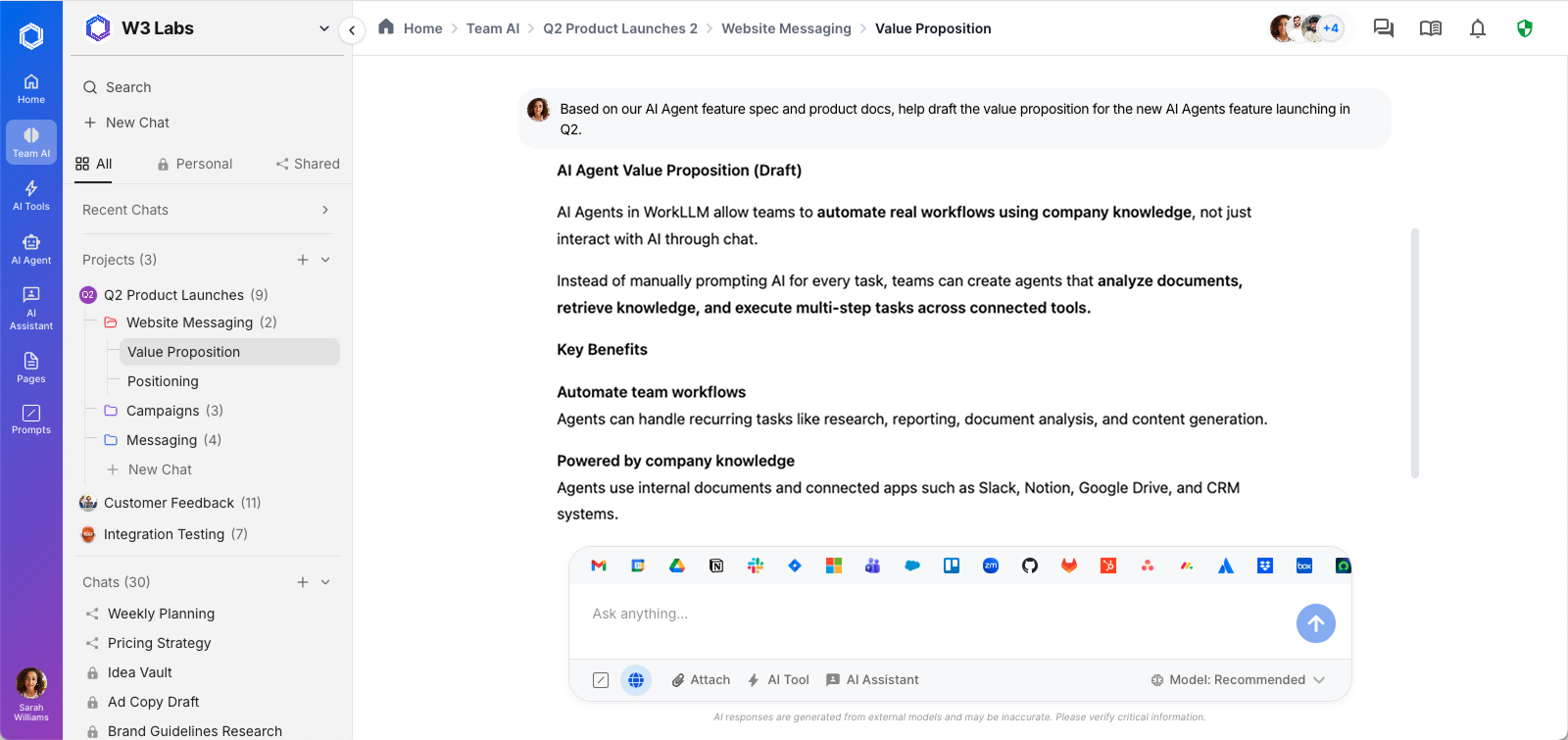
WorkLLM provides a comprehensive multi-LLM AI workspace specifically designed for executive teams who need flexibility and collaboration across diverse strategic workflows. Unlike single-purpose executive tools, WorkLLM offers access to multiple foundation models within a unified environment, enabling leadership teams to leverage different AI capabilities for various executive scenarios—from strategic planning and competitive analysis to board presentation preparation and cross-functional coordination. The platform combines structured memory systems with collaborative features, allowing executive teams to build custom workflows while maintaining context across strategic initiatives and organizational functions.
The platform’s architecture supports both individual executive productivity and C-suite collaboration, with AI tools that can be customized for specific leadership processes and AI agents capable of handling complex, multi-step strategic analysis and coordination tasks.
Key Features:
- Multi-LLM access supporting diverse executive use cases from strategic analysis to competitive intelligence
- Structured memory system that maintains context across strategic initiatives and board cycles
- Customizable AI tools for repeatable executive workflows including board prep and strategic planning
- AI agents for complex strategic analysis, market research, and cross-functional coordination
- Executive collaboration features with shared strategic workspaces and confidential information handling
- Integration capabilities with existing enterprise systems, BI tools, and executive dashboards
Best For: Executive teams seeking a unified AI workspace that combines multiple model capabilities with structured collaboration and the flexibility to build custom strategic workflows across the entire organizational leadership spectrum.
2. Microsoft Copilot for Microsoft 365
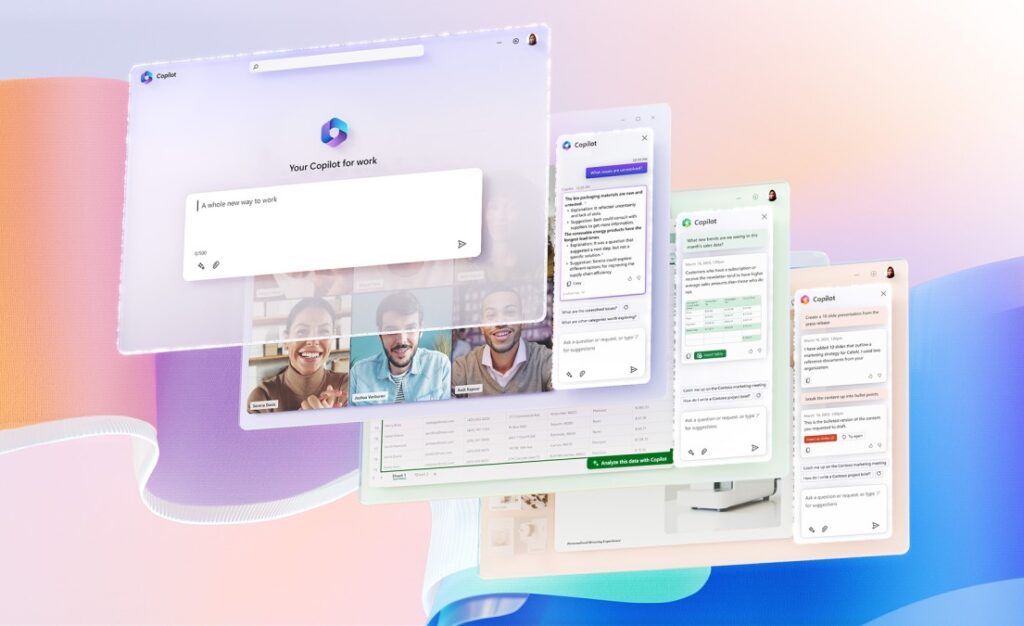
Microsoft Copilot has become deeply integrated into the Microsoft 365 ecosystem, providing AI assistance directly within the productivity tools that executive teams use daily—Outlook, Teams, PowerPoint, Word, and Excel. For executive teams already embedded in the Microsoft ecosystem, Copilot offers seamless AI enhancement of existing workflows without requiring platform migration. The platform excels at automating routine executive tasks like email management, meeting preparation, document creation, and data analysis within familiar interfaces.
Copilot’s strength lies in its ability to understand organizational context and provide intelligent assistance across the full spectrum of executive communication and collaboration tools.
Key Features:
- Native integration with Outlook for intelligent email management and response generation
- Teams integration for meeting summaries, action item extraction, and follow-up coordination
- PowerPoint assistance for presentation creation, data visualization, and narrative development
- Excel integration for advanced data analysis, trend identification, and executive reporting
- Word collaboration for strategic document creation, policy development, and communication drafting
- Enterprise-grade security and compliance controls suitable for C-suite information handling
Best For: Executive teams deeply integrated with Microsoft 365 who want seamless AI enhancement of existing productivity workflows without platform disruption or significant change management requirements.
3. Salesforce Einstein for Executives
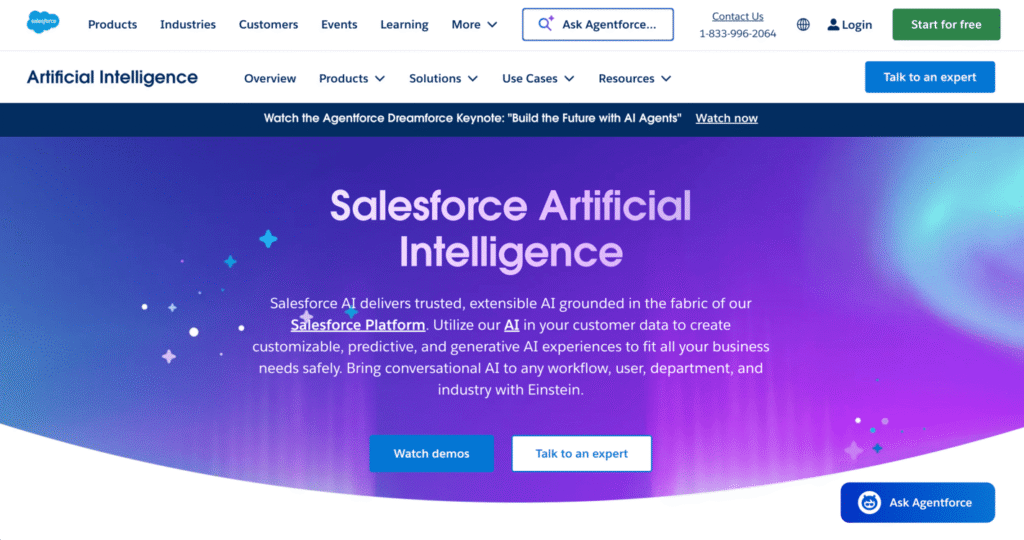
Salesforce Einstein provides AI-powered insights and automation specifically designed for executive decision-making within customer relationship management and revenue operations. The platform leverages Salesforce’s comprehensive business data to provide predictive analytics, automated forecasting, and intelligent recommendations that help executives make data-driven strategic decisions. Einstein excels at connecting customer data, sales performance, and market trends to provide actionable executive insights.
The platform is particularly valuable for executive teams in sales-driven organizations where customer relationships and revenue performance are central to strategic planning and board reporting.
Key Features:
- Predictive analytics for revenue forecasting and customer behavior analysis
- Automated executive dashboards with real-time business performance metrics
- AI-powered lead scoring and opportunity analysis for strategic resource allocation
- Customer intelligence and market trend analysis for competitive positioning
- Integration with Salesforce’s comprehensive CRM ecosystem for complete business context
- Advanced reporting and visualization capabilities for board presentations and strategic planning
Best For: Executive teams in sales-driven organizations who need AI-powered customer intelligence and revenue analytics integrated with comprehensive CRM data for strategic decision-making.
4. Tableau with Einstein Analytics
Tableau’s integration with Einstein Analytics provides executive teams with AI-enhanced business intelligence and data visualization capabilities. The platform combines Tableau’s powerful visualization engine with AI-driven insights to help executives identify trends, anomalies, and opportunities within their organizational data. Einstein Analytics automates much of the data analysis process, providing natural language insights and predictive modeling that executives can use for strategic planning and performance monitoring.
The platform excels at transforming complex organizational data into actionable executive insights through intelligent automation and intuitive visualization.
Key Features:
- AI-powered data discovery and automated insight generation from organizational datasets
- Natural language querying allowing executives to ask questions and receive immediate data-driven answers
- Predictive analytics and forecasting models for strategic planning and risk assessment
- Automated dashboard creation and maintenance for ongoing executive monitoring
- Advanced visualization capabilities for board presentations and stakeholder communication
- Integration with multiple data sources across the organization for comprehensive business intelligence
Best For: Data-driven executive teams who need comprehensive business intelligence with AI-enhanced analysis and visualization capabilities for strategic decision-making and organizational performance monitoring.
5. IBM Watson for Executive Decision Support
IBM Watson provides enterprise-grade AI capabilities specifically designed for executive decision support and strategic analysis. The platform combines natural language processing, machine learning, and advanced analytics to help executive teams analyze market conditions, assess strategic options, and make informed decisions based on comprehensive data analysis. Watson excels at processing large volumes of unstructured data—market reports, competitive intelligence, regulatory documents—and providing strategic insights.
The platform is particularly strong for executive teams in regulated industries or complex market environments where comprehensive analysis and risk assessment are critical for strategic planning.
Key Features:
- Advanced natural language processing for analysis of market reports, competitive intelligence, and regulatory documents
- Strategic scenario modeling and risk assessment capabilities for decision support
- Comprehensive market analysis and competitive intelligence gathering and synthesis
- Regulatory compliance monitoring and impact analysis for strategic planning
- Enterprise-grade security and governance controls suitable for sensitive executive information
- Integration capabilities with existing enterprise systems and data sources
Best For: Executive teams in complex, regulated industries who need comprehensive AI-powered analysis of market conditions, competitive landscapes, and regulatory environments for strategic decision-making.
6. Palantir Foundry for Executive Analytics
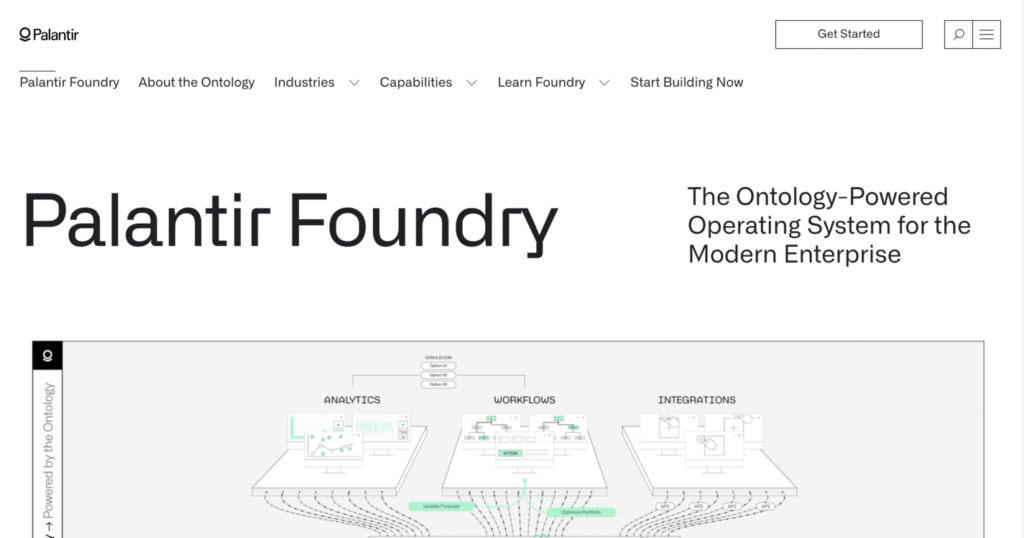
Palantir Foundry provides a comprehensive data integration and analytics platform designed for executive teams who need to synthesize information from multiple organizational systems and external sources. The platform excels at connecting disparate data sources and providing unified analytics that help executives understand organizational performance, market dynamics, and strategic opportunities. Foundry’s AI capabilities focus on pattern recognition, anomaly detection, and predictive modeling across complex organizational datasets.
The platform is particularly valuable for large organizations with complex data landscapes where executive decision-making requires synthesis of information from multiple business units and external sources.
Key Features:
- Comprehensive data integration capabilities connecting internal and external data sources
- AI-powered pattern recognition and anomaly detection across organizational datasets
- Advanced analytics and modeling capabilities for strategic planning and performance analysis
- Collaborative analytics platform enabling cross-functional executive team collaboration
- Real-time monitoring and alerting for key business metrics and strategic indicators
- Enterprise-grade security and access controls for sensitive executive information
Best For: Large enterprise executive teams who need comprehensive data integration and advanced analytics capabilities to synthesize information from complex organizational and market data for strategic decision-making.
7. OpenAI Enterprise Platform
OpenAI’s Enterprise platform provides executive teams with access to advanced AI models through a secure, enterprise-grade environment suitable for strategic planning and sensitive business analysis. The platform offers flexible AI capabilities that can be customized for specific executive use cases, from strategic document analysis and competitive intelligence to scenario planning and decision support. OpenAI Enterprise excels at providing powerful AI reasoning capabilities while maintaining the security and compliance controls necessary for executive-level information.
The platform is particularly valuable for executive teams who need cutting-edge AI capabilities for strategic analysis while maintaining complete control over sensitive business information.
Key Features:
- Access to advanced AI models including GPT-4 and specialized reasoning capabilities
- Enterprise-grade security and privacy controls with dedicated compute resources
- Customizable AI applications for specific executive use cases and strategic workflows
- Advanced reasoning capabilities for complex strategic analysis and scenario planning
- API access for integration with existing executive tools and enterprise systems
- Comprehensive audit and compliance features suitable for C-suite information handling
Best For: Executive teams who need cutting-edge AI reasoning capabilities for strategic analysis and decision support while maintaining enterprise-grade security and control over sensitive business information.
Comparison Overview
| Platform | Primary Focus | AI Capabilities | Integration Strength | Best Executive Use Case |
|---|---|---|---|---|
| WorkLLM | Multi-LLM workspace | Comprehensive (Multi-model) | Cross-functional tools | Strategic workflow orchestration |
| Microsoft Copilot | Productivity enhancement | Office integration | Microsoft 365 ecosystem | Daily executive productivity |
| Salesforce Einstein | Customer intelligence | Predictive CRM analytics | Salesforce ecosystem | Revenue and customer strategy |
| Tableau + Einstein | Business intelligence | Data visualization + AI | Enterprise BI systems | Data-driven decision making |
| IBM Watson | Decision support | Enterprise NLP/ML | Enterprise systems | Complex strategic analysis |
| Palantir Foundry | Data integration | Advanced analytics | Multi-source data | Organizational intelligence |
| OpenAI Enterprise | Advanced AI reasoning | Cutting-edge models | API/custom integration | Strategic AI applications |
Choosing the Right AI Platform for Executive Teams
For executive buyers, the selection of AI platforms requires careful consideration of strategic objectives, existing technology infrastructure, and organizational readiness for AI adoption. The most effective approach often involves a layered strategy that combines broad productivity enhancement with specialized strategic capabilities.
Start with your strategic priorities:
- Daily productivity and communication → Microsoft Copilot, WorkLLM
- Customer and revenue intelligence → Salesforce Einstein, Tableau + Einstein
- Complex strategic analysis → IBM Watson, Palantir Foundry, OpenAI Enterprise
- Cross-functional coordination → WorkLLM, Microsoft Copilot
Consider your technology ecosystem:
Executive teams should evaluate how AI platforms integrate with existing enterprise systems, data sources, and workflow tools. Platforms that work within established ecosystems (Microsoft, Salesforce) often provide faster deployment and adoption, while specialized platforms may offer more advanced capabilities at the cost of integration complexity.
Evaluate governance and security requirements:
Executive-level AI platforms must meet the highest standards for data security, privacy, and compliance. Consider platforms that provide dedicated compute resources, comprehensive audit trails, and granular access controls suitable for sensitive strategic information.
Plan for organizational adoption:
The most sophisticated AI platform provides little value if executive teams don’t adopt it effectively. Consider the learning curve, change management requirements, and ongoing support needed for successful implementation.
The Future of Executive AI
In 2026, the most successful executive teams are building comprehensive AI strategies that combine:
- Productivity platforms for daily workflow enhancement
- Strategic analysis tools for complex decision support
- Integration capabilities that connect AI insights across organizational systems
- Governance frameworks that ensure responsible AI use at the executive level
The trend is toward AI platforms that don’t just provide isolated capabilities but create intelligent ecosystems that enhance executive judgment, accelerate strategic analysis, and improve organizational coordination.
For executive teams ready to leverage AI strategically, platforms like WorkLLM offer the flexibility to orchestrate multiple AI capabilities within secure, collaborative environments while maintaining the governance and control essential for C-suite operations.
The question for executive teams is not whether to adopt AI, but how to build AI capabilities that enhance strategic decision-making while maintaining the human judgment and organizational wisdom that drive long-term success.
Ready to transform your executive workflows with AI? Consider which platforms best align with your strategic priorities and organizational infrastructure.
Author Details

Product-focused founder with deep experience in AI, enterprise software, and data platforms. Passionate about turning complex workplace problems into simple, scalable products.